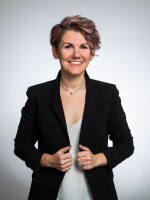
Back in September, the High Turnout Wide Margins team traveled to Fort Lauderdale, Florida, for the 2025 Summer Convening of the Partnership for Large Jurisdictions, or PLEJ.
While there, hosts Eric Fey and Brianna Lennon had the opportunity to speak with election administrators from across the county and world. They also had the opportunity to take the stage for a special live taping with Carolina Lopez, the executive director of PLEJ.
They spoke about the history of PLEJ, as well as how it has grown and benefited election administrators across the county. They also brought several members on stage — Zach Manifold of Gwinnett County, Georgia, and Kurt Bahr of St. Charles County, Missouri — to share how PLEJ has supported them in their work and how they have given back to the organization.
High Turnout, Wide Margins Credits:
Managing Editor: Rebecca Smith
Managing Producer: Aaron Hay
Associate Producer: Katie Quinn
Digital Producer: Mark Johnson
Transcription of the episode is as follows:
Carolina Lopez: I very affectionately call them the OG six — six counties took a chance on this crazy idea of getting together and uplifting best practices in a nonpartisan manner, and here we are. Three years later, we are now in 133 jurisdictions, 35 states plus D.C. Collectively, they administer elections for over 118 million Americans, and for those of you that do not like math, that's about approaching 40% of the US electorate. And we're just getting started.
[High Turnout Wide Margins Introduction]
Brianna Lennon: Welcome back to another exciting episode of High Turnout, Wide Margins. This is Brianna Lennon. I'm the County Clerk in Boone County, Missouri, and with me is my co-host —
Eric Fey: Eric Fey, Director of Elections in St Louis County, Missouri.
Brianna Lennon: And today, we are really to talk to —
Carolina Lopez: Carolina Lopez, Executive Director at the Partnership for Large Election Jurisdictions. PLEJ for short.
Brianna Lennon: We are very excited to be at PLEJ, at this live convening in Fort Lauderdale, but first we want to ask about you and your story in elections. So, how did you first get started in the election space?
Carolina Lopez: My mom worked in Miami-Dade County. She was in HR, which meant that I became a little intern in the county. When I was 15, I got matched up with elections. I got a job full time at 18 — going to school full time and working full time. And somewhere in there, I went from project management to somebody saying, "Well, you're a logistics girl. Do you want to come to the elections department and help us out?"
This was circa 2006, and, at the time, it was like, "Well, you know, you just have to be there a couple years, and then, you know, we'll try other departments, you know, water and sewer, public works." Little did I know then, back in that faithful 2006, that that was going to change my life forever, and, you know, it's infectious, and this is a calling. I would not want to be doing anything else but this.
Brianna Lennon: So, I mean, what has stuck with you as you have been moving from your experience [in] Miami-Dade to now that has helped you inform — before we get into what PLEJ and all that kind of stuff, I'm just wondering, from your perspective, like you clearly saw a need. What was it when you were in Miami-Dade that kind of gave you that impetus?
Carolina Lopez: So, one of the things that's really interesting is if you look at when PLEJ was officially formed, it was the summer [of] 2022,. But if you ask when the concept of PLEJ was formed, I had hoped and dreamed there was an organization, a nonpartisan organization, connecting similar counties with similar challenges in how we process voters more quickly. How can we be better communicators? And at the time, I just didn't know about it.
To give you some context — 2011, the Florida Legislature cut early voting from 14 days to eight days, so virtually half. The type of voting locations were restricted to very specific rooms like libraries or community centers or courthouses. And I don't know about you, but I haven't met a courthouse that has ample parking or ample square footage. So, that compounded with the longest ballot in history — we had six cards, 12 pages. Everything is an English, Spanish and Haitian Creole in Miami-Dade County. Another consequential election at the presidential, state and local level, and unfortunately, that resulted in five and a half hour early voting wait times persistently during early voting. I believe that when Obama's second term was called, we still had voters in line waiting to cast a ballot.
That hurt for so many reasons because when you are saying, "I need time to process, I need space to put voting equipment, this is a really long ballot,” and you don't — the cavalry is not able to meet your needs and you don't meet the voter experience that voters are expecting — you're only as good as that last election that you did. Then, comes the presidential election commissions of “what happened in 2012,” right? And so, I remember during that time thinking, "Who could I have called? Who could we have called? Who was our counterpart in logistics? Who was our counterpart in outreach? Who was our counterpart?"
And when you're the largest county in a state — you are that to your peers, but then who do you go to? Now you have the Election Center. Now you have NACo [National Association of Counties]. Now you have NCSL [National Conference of State Legislatures]. Now you have PLEJ and many other ways to connect, but not having that community was certainly hard felt. And that's sort of what started this whole crazy idea of having a place where we connect with like minded individuals in a nonpartisan way to figure out how we do elections better, faster, stronger.
Eric Fey: So, we know the Carolina origin story — at least the elections Carolina origin story. Tell us about actually getting PLEJ off the ground. That seems to me, at least, like a very daunting task. So how'd you get this thing started, and how did you get it from where it started to where it is now?
Carolina Lopez: I left county government in 2017 and started working with nonpartisan advocacy groups. My biggest pet peeve at the time was when I had 20, 30 groups that wanted to meet with the elections office for a one hour meeting a week before a presidential election. Each group would have a very different honey-do list, a list of 75 different things that they wanted us to do a week before a presidential election.
And I remember thinking, "Okay, well, I'll take the meeting. I want to be respectful. I want to be a good partner, but you're setting me up for not being able to help you." If you had come in earlier — if the 30 groups had coordinated and said, "You know what we really need? What we need is a new early voting site in this location, and here's the data that supports why we think that this will best support our community." We could have delivered. They could have gotten a win, we could have gotten a win. The commissioners would have gotten a win, right?
And so, I sort of did that for a few years — which was educating the election advocacy community of like, “Okay, what is most important to everyone? Does everyone need a separate one hour meeting, or can you just meet as a team?” That worked really well in a number of states, regardless of party affiliation. I saw that the election officials were like, "Huh, this was helpful, you know, do you want to do this quarterly? Do you want to do this monthly?" So, it was working both ways. You were getting better asks, you were getting data driven requests, and you were getting more frequent communication, so there was partnership happening.
Somewhere in there, the opportunity presented itself to connect election officials to each other. And so, you know, I very affectionately call them the “OG Six.” Six counties took a chance on this crazy idea of getting together and uplifting best practices in a nonpartisan manner. And here we are. Three years later, we are now in 133 jurisdictions, 35 states plus D.C. Collectively, they administer elections for over 118 million Americans, and for those of you that do not like math, that's about approaching 40% of the US electorate, and we're just getting started.
Applause
Brianna Lennon: So, can you — what are the six counties that started it out?
Carolina Lopez: The original six. So, you have Denver — city and county of Denver, Colorado, the one illustrious — you have New Jersey, you have Durham, North Carolina, and Noah Praetz, formerly with Cook County, Illinois. He's been not just like a fantastic friend and partner, but somebody who gets it, like, being Cook County — being the second largest county in the country, like, sort of helping us try to figure out, “What does the community need? Let's not duplicate. Let's be a value add, and, most importantly, let's be partners to the groups that do this work.”
The Election Center has been incredibly kind. So, have a myriad of [a] number of other nonpartisan groups. The OG six in December 2022 turned into the OG 20, three months later, to the OG 100 at the end of 2023. It's just such a running target. That's a joke in the office. Everyday, like, “What's our numbers? What's our stat line?” And it's pretty fantastic. Recently, we just added, you know, I want to say we've added 40 jurisdictions just this year. Forty jurisdictions, let that sink in.
Applause
Brianna Lennon: I think that's even more impressive when you mentioned the Election Center and NCSL and all these groups that already exist. PLEJ is doing something unique in serving a need — especially for large jurisdictions, but I know that there are some slightly smaller counties that have been joining as well because of, I think, the innovation and the community that PLEJ provides. And I'm wondering where you see PLEJ going one, two years from now? 10 years from now? What are you hoping to accomplish?
Carolina Lopez: One of the things that when people ask, "Well, what do you do? Like, what's your job?" And I'm like, "Oh, I love playing super connector." My job is to connect, right? If somebody — and this just happened under a month ago. There was a county that had lost their voter registration vendor, and they're like, "We have — we need to have a voter registration system. That's sort of a thing we do every day." Within half an hour, we're like, "Okay, would it be helpful if we connected with three or four counties of similar size, and you can ask them questions. What equipment they went with? What are the pros? What are the cons? What was the RFP [Requests for Proposal]?" Within 30 minutes, they had email introductions, and it was a warm transfer, right? We certainly don't tell — we don't recommend folks what they should buy. That is not my forte, right? But if you're asking who is a good partner, that's [what] we're here for and in terms of partnerships I mean, everyone's been fantastic, you know, Bipartisan Policy Center has a workforce work group. They invited us to that. The University of Rhode Island partners with us. We build publicly available, crowd sourced operational forecasting tools.
So, whether you have 500 voters or 5.6 million — these tools are adaptable. They're designed for the largest counties, but we build it and provide it available to everyone, because election administration is so fluid and in most — in every state, right? We all help each other out. It doesn't matter how many voters you have. We're all in this together, and that's our approach to resources too.
[High Turnout Wide Margins Midbreak]
Eric Fey: So, Carolina, in your role as super connector, we have some people up toward the front here during happy hour, which means they are the nerdiest of the nerds. Are there any up here that have worked with you and PLEJ that have been on the steering committee that maybe you'd like to bring up to say a few words?
Carolina Lopez: Absolutely. I'd first like to start with Zach Manifold. He is with Gwinnett County in Georgia. [Zach] has been in elections in Ohio and Georgia. One of my favorite people to discuss big ideas and operational — and also how to empower your team to make decisions, for leadership not to be the bottleneck, and how to prepare that next generation of leadership. I've never met someone who's a bigger cheerleader for his team than Zach, and the reason why I wanted to have him join is we've been working, or we worked last year, on a series of media roundtables, and that sort of may or may not have been helpful for the 2024 election day that he had last November.
Zach Manifold: I found PLEJ, actually, I think it was like somebody that had gone to Los Angeles, and the original 20 people, I think there was a couple Georgia people that had gone. I couldn't go, and something was going on that week, and they all came back and were like, "Oh my God, you have to — you gotta see this thing." Then, I went to Minneapolis last year. Just the amount of — it was like the first conference I've ever been at where it clicked, and it was like, "Oh my God." I was like, "Every single person in this room does exactly what I do." And I've never been in that room before because it's like, you go to every state conference, you go to Election Center — I love Election Center — but it's still 80% small to medium counties that I love them to death, but they just don't have the volume and do what we do.
So, the work — going to PLEJ, and getting that experience, that comms experience. All year long it was just this build of — I forget. We had like 50 countries or something like that come through. Like half of the interviews I did last year were international, and it was just great because every interview was just a test to start, you know, you just kept working in your talking points, and you just kept throwing in different things, and you would see how the response would go. It was just kind of the ultimate kind of build and build and build. Then I got to election night, and that was like, you know, I never even thought about it being live. Somebody was like, "You know, that was live TV." I had done so many interviews it really didn't matter at that point. But, yeah, it was a crazy year last year. It was a lot of fun.
Carolina Lopez: One of the things that it's really striking about Zach is — LeBron James still practices every day, right? So, if the greats are practicing their craft every single day, so must we. And again, this is something that you continue — you're just such a natural like you feel super comfortable. It sets goodwill, not just for Gwinnett, but for the Atlanta metro area, for the state.
Zach Manifold: Yeah, when I got to Georgia, four years ago now, it was bizarre to me. I arrived and it was like, the eight or nine counties that make up the metro, like, nobody talked to each other. And it was this bizarre thing. I remember one of my first meetings that I had and… it was almost like they viewed each other as the competition or something. And I'm like, "Wait a second." I'm like, "We're all in this together If they go down, we go down. This isn't gonna work.” That whole competition thing that everybody had about, like, "Well, we do this, but they don't do that." It was like, “We're all going to do it, we're all going to do it well.”
And, you know, we started building as a region — we've been doing that for now, at least, like two and a half years. Really great. We just had a workshop, a regional workshop with the eight or nine counties. We had over 100 staff there. It was probably better than any state conference that we've done, and it was just our local region. It was the county — sort of like a mini PLEJ. It was like… what we do — talking to each other, and a lot of really great ideas shared back and forth, and that was the thing that had changed, I really do think. That's part of the downside. I know we had such a huge turnover, and I know it was rough, and we all kind of went through it, but the people that are in it now are a lot more, like, they're in it. They know what they signed up for, and they know that we all have to do it together.
Tate was from Virginia. I'm from Ohio. Keisha is out there somewhere. She was also Virginia and Nadine just taking over Fulton is just amazing. And so, I think all four counties have grown so much in the last four years that I've been there. And I'll never forget, I think at one point, one the national media interviewed me, like, a year into the job. They're like, "You're the most senior election director in the Atlanta metro." And I'm like, "Well, holy crap, I'm only 11 months in. What do you mean?" I was like, “That's true. Everybody has left,” but that was okay. We started over, and we worked together and we built.
You know, that's my biggest worry, is it's always — ‘Please don't blow it up.” I go to the legislature. “Please don't blow it up. Please don't make huge changes,” like we are finally we've got our feet like we're finally starting, like, staffs getting there. They're learning things. “Please don't make major changes that throw us into this cycle again,” but it's going well.
Eric Fey: Awesome. Thank you so much.
Applause
Zach Manifold: Yeah.
Eric Fey: Carolina, who is next on the Price Is — I mean the podcast here. Who's coming on down?
Brianna Lennon: Do. Do. Doooo. (mimicking the Price is Right theme song)
Carolina Lopez: I'd like to invite Kurt Bahr, St. Charles County, Missouri — very far away from you. Kurt joined PLEJ a couple years ago and last year, I think there was a tie between Kurt Bahr and Catherine McMullen from Clackamas for perfect attendance. You came to every webinar, monthly webinar. You came to every communications work group. You joined me in media roundtables. You never say no. You always call with great suggestions on programming or ideas of conversations we should have with other folks of equal size or similar challenges.
Kurt Bahr: So, my county is adjacent to Eric's county. But I got to hear about PLEJ in the first year from somebody who knew about it at our state association. And I frantically called and said, "Hey, it's coming up. I would love to be a participant in the Los Angeles PLEJ. How can we make this happen?" And you guys made magic happen, and so, I was able to go to that.
It was an amazing event because there's only a handful in any state that have large election jurisdictions. And our needs and issues are different than our smaller counterparts, and state association is great, and getting to work with them is wonderful, but they don't — like when we talk about how you're going to handle this? My scale and scope is just so different than theirs that we just can't really share the best practices like we can when we get here and everybody's dealing with hundreds of 1000s or millions of voters and dealing with larger staff and dealing with, for the most part, being dedicated to elections as your primary task.
Carolina Lopez: I also think that we can be better partners in-state, and we could show up in a different way at our state conferences by connecting with other folks. Today we heard not just from folks from other states, but from other countries, right? And so, we all took copious notes, and when we go to the next state conference, we bring that additional lens, that additional background.
So, I'd argue that our state associations might be happy that we're talking to each other because then we are bringing fresh ideas to the table, right? Kurt, you and I were even joking about, like, taking roll call at state associations, right? Barcodes versus saying present, like, it's just we focus on the operational. We don't focus on the politics of it. It's just how do we do things, faster, better, stronger, transparent, right?
Kurt Bahr: Right. And we work on best practices. “What have you done? What have you innovated that works for you? And how can we use that?” Sometimes it's interesting to see “Hey, they do this. I would never do that because that seems too much work for me,” but I'm glad to know how they do it because it's easy to say — because our voters are like, "Well, you know, it works in our area, but the other area — that's where the issues are."
It's so much easier when I can say, "I know the directors in those jurisdictions, I have been to their facilities, I have talked to their staff, I have seen their passion for good elections. I know that they are above board, and that they are doing things well. They have different states and different laws. You may have an issue with their state policy, but that's for their state legislature. It's not on the election authorities.”
And getting to meet with other jurisdictions across the country, in red and blue states, has opened my eyes and allows me to defend my colleagues in other areas, and say, "No, they are doing a good job. I have seen their operations. I have seen their passion, and I know that they care about the voters."
Carolina Lopez: And speaking of super connector — one of the reasons why Kurt up here was he was very kind to invite me to a town hall that you did, and so, earlier today, we did a tabletop exercise of what happens if infrastructure fails, right? You have a hurricane or something happens, and you have no Wi-Fi, you have to go analog. And it just struck me that maybe knowing about a tele-town hall, reaching out to your community might be a great way to keep trust in elections. You briefing them on “Here's what's happening, here's how it impacts you, here's when I will be back and we got your back.”
And would you be willing to share a little bit about what that process looks like?
Kurt Bahr: Yeah, so we call it proactive engagement. We started it after redistricting because we had a significant change in our polling places. There was a lot of voters going to new locations, and our precinct numbers had also changed. And so, we wanted to make sure people understood where to go on Election Day at the polling place and understand about this change. We did the telephone town hall, as well as other media, to communicate that to people. We did first a robocall, "Hey, I'm Kurt Bahr. I’m Director of Elections. I'm going to be calling you tomorrow at this time to talk about this. If you want to participate, either stay on the line or press this number, right?"
But we also said, “We're going to talk about the changes in your polling locations,” and then we talked about that, and then we also gave the voters opportunities to ask questions. We had a moderator, and we lasted for 60 minutes, and then we ended. Then the next election, there was another change, another thing that we wanted to update, and so, each election, there was a topic, like, “Hey, I want to highlight this thing.” Whether it's a change, another early voting location or whatever the thing was, and we made sure that they knew about that. Then, we answered questions about the election afterwards.
And our engagement was not as great as I would have liked. I would love for everybody in the county to have gotten on the phone with me, but because we could do that message and just say we're talking about this one issue. We're able to make sure that they knew, “Hey, this is the next thing that they need to be aware of,” so that they can then go to our website or look into it if it was something that they were concerned about. So, we were able to use not only the telephone town hall, but the message beforehand to educate voters.
Eric Fey: So, I think we're bumping up against time here.
Brianna Lennon: Are we? Okay.
Eric Fey: So, Carolina, any closing thoughts you want to leave us with up here or anything that we should have asked you that we didn't?
Carolina Lopez: I'm still thinking about the question that Brianna asked, like, "What is, what does it look like in the next year or two, or 10 or 20?" And I keep going back to sort of our mission, right? Which is when these large election offices succeed, so does the rest of the country because they set the tone, right? And when Miami-Dade had national coverage in 2000 or pick any county, any year, anytime, anyplace — it could be easy to lose trust, right?
So, what I hope in the coming years — it's more collaboration, more conversations, more workshops, more conferences, more tours of each other's offices, more converting ideas of what we want to do. I want to do a podcast in Georgia — checking off that box. I want to go visit this elections office – checking off that box. I want to partner with you on building this new tool with this university — checking off that box, putting it online so everybody can use it, fine tuning our craft, because what we learned today was — and we had individuals, not just in elections. We learned globally, but also from other industries, which is the world does not stop, and neither should our innovation. The world does not stop, neither does technology. And that's the future.
So, as long as I live and breathe, we will continue connecting, we will continue modernizing, we will continue fine tuning and having these amazing conversations and listening to you guys doing this for another 10, 20, 30, 50, years. So, there's that.
Laughter
Brianna Lennon: Thank you. I think thank you for letting us have this opportunity to be able to commandeer the stage and have these conversations. Speaking as not a large jurisdiction, it really is important. I think what you said really strikes a chord that in Missouri, the St. Louis counties and the St. Charles have to succeed for all of us to succeed. And while I think a lot of small jurisdictions might not want to admit that it is true, it is true. I appreciate the work that you do every day to make sure that that happens.
Carolina Lopez: Right back at you both. Thanks for helping us tell our story.
Eric Fey: Thanks, Carolina. Appreciate it.
Brianna Lennon: You've been listening to High Turnout Wide Margins, a podcast that explores local elections administration. I'm your host, Eric Fey, alongside Brianna Lennon. A big thanks to KBIA and the Election Center for making this podcast possible. Our Managing Editor is Rebecca Smith. Managing Producer is Aaron Hay. Our Associate Producer is Katie Quinn, and our Digital Producer is Mark Johnson. This has been High Turnout Wide Margins. Thanks for listening.