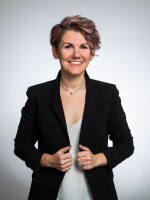
In this episode, hosts Brianna Lennon and Eric Fey speak with Lauren Prather and Thad Kousser, the co-directors of the Center for Transparent and Trusted Elections based at the University of California-San Diego.
They spoke about some of the research they have done, which shows simple and effective ways for election administrators to connect with their constituents and grow trust in elections. This includes office tours, video office tours, simple and “authentic” social media videos and more.
High Turnout, Wide Margins Credits:
Managing Editor: Rebecca Smith
Managing Producer: Aaron Hay
Associate Producer: Katie Quinn
Digital Producer: Mark Johnson
Transcription of the episode is as follows:
Thad Kousser: So actually showing people why and doing it in an authentic way — that can be really effective across whether it's a tour, a video version of a tour, working with your local media, or just walking down on onto the floor with your cell phone and getting a quick vertical video. We did a recent study led by some of our younger collaborators, who live in this world where everything's just a quick vertical video, right? In the TikTok world. And those were equally effective as professional videos explaining elections protections and for 18 to 24 year olds — they were off the charts effective.
[High Turnout Wide Margins Introduction]
Brianna Lennon: Welcome back to another exciting episode of High Turnout Wide Margins. My name is Brianna Lennon. I'm the County Clerk for Boone County, Missouri, and with me is my co-host —
Eric Fey: Eric Fey, Director of Elections in St. Louis County, Missouri.
Brianna Lennon: And today we're going to be talking about building trust in tangible ways, in elections offices, and we'll have you both introduce yourself.
Lauren Prather: Great. I'm Lauren Prather. I'm an associate professor of political science at the University of California San Diego, and I'm the co-director of the Center for Transparent and Trusted Elections.
Thad Kousser: Great, and I'm Thad Kousser. I'm a political scientist also at UC San Diego and co-direct this new center with Lauren.
Brianna Lennon: So we will be diving into some of the research that you both have been doing, but first, we want to ask, you know, you're working on this new center and all of this very specific election trust work. What brought you into the elections administration fold and anybody can start?
Lauren Prather: Yeah, sure, I have been interested in elections for a long time. I mean, some of my first political memories were around controversial elections that happened when I was in high school. I was also very interested in government and law, and I participated in Youth in Government in the state of Missouri, which is the high school program where I proposed mock legislation to allocate Missouri's Electoral College votes by a congressional district rather than a statewide vote. So, you could say my interest in elections goes all the way back to at least high school, if not earlier, and then I've continued that thread throughout my education, and then now, as a faculty member working at this new center.
Thad Kousser: Like Lauren, I’ve been just a political junkie and involved in elections my whole life. The first precincts I walked were in the 1970s when I was a little kid being dragged along by my parents. And I've worked polling places. I was a legislative staffer in the California State Senate, in the US Senate and the New Mexico Senate before I became a professor. And so, throughout my career, I've always tried to find research topics where we could have news that people could use that related to the issues of the day that we're addressing. Things like the different ways to run state governments, and then that transitioned into leading a large project with faculty all across the University of California system looking at California's voting laws, and then how they changed during the pandemic. And then, really after that 2020 election that became such a crucible and a challenge for many election officials — we gathered together that team, broadened it to collaborators in states like Texas and Georgia, and always partnered with election officials in those states to figure out what are their questions about trust in election, what are they trying to do and what do they need data on to help guide their their actions headed into the election cycles of 2022, 2024 and and now, looking towards 2026.
Eric Fey: Well, Thad – you answered a little bit of my next question already, but can you both go into a little more detail about kind of the impetus behind this program you two are heading up, and why, in particular, election officials should take notice of it.
Thad Kousser: So, I can talk in general about the Center for Transparent and Trusted elections, and the research that we've done the last few years leading up to it, and then maybe hand things off to Lauren to talk to some specific research.
So, the general idea is that election officials are trying a lot of different things to increase trust in elections, right? Their jobs changed from being “people had to run trustworthy elections” to “be people up to keep running trustworthy elections, but then actually find ways to get the public to trust them,” and so, what our research has done is 1) really shown that — so lots of folks in the public, this will be no surprise to you, just really don't know all the protections there are. You mail in your ballot, you drop off your ballot, you turn in your ballot into the ballot machine, and then after that — it's kind of a black box.
And what we've learned over the years is that when you provide voters with information about that, from a trusted source — and it turns out state and local election officials are the most trusted source that voters turn to. We’ve found this survey after survey, and state after state and the nation as a whole, they are listening to you all. You are the people they trust. When you explain all those protections through videos, through graphics, through election facility tours, we've shown, using rigorous methods, those work, right? Those lead to increases in trust, pretty significant ones, and they let people actually learn the specific protections on elections.
So, when you show someone a video 30-second guide to protections on elections, you ask them about protections afterwards — they're able to tell you about how elections are protected, and they say that they trust them more. And the research that we're trying to do now and that we're taking out to election official association meetings all across the country, and then we really want to get the word out about — shows kind of what works, what doesn't work, and what works best when it comes to communication, and it turns out facility tours are one of the things that works best.
Lauren Prather: So, I would also say, just to add to what Thad stated was — our goal is also to bring rigorous science to evaluate what election officials are doing because we understand perfectly well that election officials, in many cases, are underresourced in terms of their time and their money, and so, having really good science evidence to back what they're doing, and to know, as Thad said, what works, what doesn't, what works best if you have limited resources, where to put those resources that are backed by evidence, I think is really key to helping election officials navigate this new world.
Brianna Lennon: So, I think that's a good segue into actually talking about what the evidence shows about things like tours of election offices and things like that. So, can you touch some on what it is that election officials can do and what tours look like? We mentioned before we kind of started talking there's a scalability issue of large offices versus small, but just talk a little bit about what you found in your research.
Lauren Prather: Great. So, it would be really useful, I think, to also think about the election facility tour project as a blueprint for the kind of work we do that doesn't have to just apply to election facility tours. So, that's something to keep in mind, as well. This partnership is an example of the kind of work that we're doing.
So, we started talking with Stephen Richer, the county recorder in Maricopa County, Arizona, who said just before the 2024 election that his office was starting to give tours of the Maricopa County Election facilities, and he talked to us, and he was like, you know, “I don't know. These, these take quite a bit of time. They're two hours long. We're inviting members of the community to come into these offices, and we really don't know if it's moving the needle for the people that go through the tours.” And so, we basically said, “Well, we could help you design a study that could show you whether what you're doing is working or not.” And the study is fairly simple in design, we essentially proposed to Stephen and his office that they survey people as soon as they arrive on site for the tour. So they scan a little QR code on their phone, they take a five minute survey that asks them a few simple questions about their trust in elections and their knowledge about elections, both in Maricopa County and more generally, and then we have them pause the survey. The elections office gave their tour, which, again, was about two hours long. It was with an official that was in their office who answered questions and showed them different places along the, you know, ballots route through being counted and opened and serviced and all of that. And then at the end of the tour, before people left, they got back into that survey and took about five more minutes before they closed out. Answered basically the same questions about trust and about knowledge, and then a couple questions about how they liked the tour, so that Stephen's office could get some feedback on that. And then we, as researchers, compared essentially the post-tour answers to the pre-tour answers to see whether or not people's trust and knowledge changed after experiencing that tour. And we started these tour surveys in February or so before the 2024 election and we did them all the way through around September of 2024 — around the time his office stopped giving the tours because they had to, you know, focus their energy on the election. But through that process, we were able to survey more than 300 participants that had gone through the tours, and we did find that from pre-tour to post-tour, a significant increase in trust in elections — both trust in Maricopa County's elections, but also trust in elections nationwide. And we found that the most significant growth was among the folks that came in that were more skeptical about elections, and in the case of Maricopa County, that tended to be Republican participants in the tours. Democrats experienced smaller growth, but they came into the tours more trusting.
So, one thing that we were really excited about was that we were able to test if you show people a video of, in this case, Stephen Richer who is the Maricopa County Recorder, walking through the tour facility and talking with an individual, I think, a local, known reporter, and talking them through the different points along the facility tour, would it have the same effect on individuals confidence in elections? And then, similarly, Stephen's office used a technology that I think is available to many places in the country. So, if you can imagine the website Zillow or other real estate websites that have virtual tours of homes — his office used that same technology to do a virtual walk through of the election facility that they posted on their website and that people could click through on their own time that had pop ups that described what people were seeing as they clicked through the virtual tour. And we tested both of those modes on a large national sample. We did the same design of a pre-video or pre-virtual tour set of questions about trust and then a post-video or post-virtual tour set of questions about trust, and we found that we get basically the same effect of the in-person tour experience. So, we think this could also be a great option, again, for maybe smaller jurisdictions or less resourced jurisdictions that could employ or take, you know, a day to set up a virtual or video tour, but then those effects having similar impact.
[High Turnout Wide Margins Midbreak]
Brianna Lennon: Did you all track, I mean, I guess, what is it about a tour that really kind of pushes people towards that, like understanding and trust because it's interesting to me that both a virtual tour and an in-person one — given we put so much emphasis on, you know, go and meet your election officials and be face-to-face and build those relationships — but if you can achieve those same results, I think it's really interesting, and I would love to know what it is people are responding to.
Thad Kousser: Yeah. I mean, I think that idea, like, seeing that election officials are people too, right? That you guys are their neighbors, their friends and that you’re normal folks doing this job that you all take so seriously. That is one of the themes that we've seen across all these different modes of communication, right? Whether you're looking at social media messages, at sort of PSA style ads, or when you have an election official doing an interview with a local news media, we found that all of those can be effective, and often the things that work best are when you just show, like low production value. Just “Hey, here I am. I'm opening up the doors to this facility.” So that key pit of transparency. “There’s nothing to hide here.” And you just show, “Hey, I'm just here. I'm your public servant,” and you walk people around and show them, you know, “here's this machine, here's how we do this thing, here's,” you know, “we test these machines beforehand.” You know, the logic and accuracy test — they may now not know what that means, but describing in plain language what that means. Those things where you sort of show as well as tell, those seem to be really effective. We've also tested kind of fancy ones done by a public relations company, and some of those are also effective, but not any more effective than these kind of just, you know, really basically produced authentic, you know, coming straight from the source.
And the other thing we found is there's, there's kind of one group of things that don't seem to work. When people just say, “Hey, I'm the elections director” and,” you know, or “I'm the Secretary of State. I'm a Republican Secretary of State,” or “I'm the current Democratic Secretary of State, we both agree you can trust elections,” but they don't actually tell you why — those weren't effective. So, actually showing people why and doing it in an authentic way that can be really effective across whether it's a tour, a video version of a tour, working with your local media, or just walking down onto the floor with your cell phone and and and getting a quick vertical video. We did a recent study led by some of our younger collaborators who live in this world where everything's just a quick vertical video, right? In the TikTok world. And those were equally effective as professional videos explaining elections protections and for 18 to 24 year olds — they were off the charts effective. So, if you want to reach young voters do it by in a quick vertical video with you just telling them what you're doing.
Eric Fey: I think this is probably music to Brianna's ears. She'll be TikToking probably more in the office now, who knows? So, when I first heard about your research, I was very heartened by it because, really since 2020, but we did a little bit before that, we made a more deliberate attempt at having facility tours in my office, and it's one of my favorite things to do. And we try to get groups of all kinds, you know, if the Rotary Club wants to have their monthly meeting up here. We've had, you know, fraternities and sororities have meetings, you know, school groups — all kinds of people. And, of course, you know, political parties, and you know, municipal officials — those kind of people, as well. But we'll take all comers. We love doing the tours, and, to me, it always felt like it was very effective, but rigorous science is not something that has normally been associated with my name, so it was very heartening to know that there is some rigorous science behind what we were feeling was very effective. But my question is, you know, Maricopa County, that's one of the largest election offices in the country, and I've been there a couple times on their tour, and you know, just, you know, my favorite part is, you know, we save the warehouse for the end, and once you bring people into the warehouse, then it's like, “Oh my god. I had no idea the election office had all this stuff,” and it's kind of overwhelming, and, you know, it puts people, I think, kind of in a different headspace about what they're seeing and hearing. So, with that in mind, my question is —for the vast majority of election offices in the country, it's like, “Hey, this is the room where myself and my two staff members work, and those are our five voting machines in the closet in a corner.” Have you all measured at all, or thought about what a tour might look like for an election office that's very small?
Lauren Prather: I think this is a great point, and actually, I mean, we're open for business, open for doing more research. And I would say that's a gap in our knowledge space right now that we would be very happy to fill. I mean, this is an ongoing project. We're working with a few different offices across the country— some that are as large, or, you know, similarly large to Maricopa County, but others that are smaller and in different states. So, certainly it is challenging to make generalizations from a place like Maricopa County, but it is definitely a good start. So, I think there are definitely additional questions we would love to answer with ongoing research. So, one of which could be, you know, what about smaller election facilities? What about election facilities that are older versus newer? So, one of our projects that we're doing right now is working with a county that is recently invested in a big new election facility space with transparency in mind, and they're interested to know if we show people pictures of our old facility versus our new facility, do we see gains in trust? You know, did this kind of investment pay off? And so that's another question that our Maricopa County study couldn't answer, but one that we could answer with a similar methodology, but a different partner in this case.
So, I think a question about, you know, smaller communities, what would the gains for having a facility tour be in those communities? And then I'll just throw out another open question that we still have is about the durability of these effects. So, our pre/post design is great for understanding the immediate impact of these tours on people's confidence, but we are really interested in trying to learn how long these effects last. Do people talk to other folks in their lives about these tours? So, are there knock on effects to the tours? So, if you bring 200 people through your facility over the course of six months, are you actually reaching 1000 people? Because each tour participant then acts like an ambassador, sharing what they learned at the tour, and so, some of these questions are still ongoing and, you know, work with partners, other election officials can help to answer those additional questions.
Eric Fey: I also wonder if there are any best practices you've identified around giving tours, you know? Thinking of Maricopa County, in particular, Stephen Richer is a particularly engaging person. He'll answer any question, you know, and again, they have a very big facility, and they probably have a very well thought out methodology as to how they show people around it. Do you have any best practices for election officials that are thinking about making their tour-giving a little more robust or more well thought out?
Thad Kousser: I can kind of summarize what in the last, you know, four years we've learned about communications overall. The short answer — the most important thing that I love any election official to walk away from this is — it works. When you show who you are and talk about the protections that you do every day to make sure that people's votes are counted as cast, that moves the needle from trust. We've tested this in — we've done studies in Texas, Georgia, Colorado, California, Arizona, Virginia, Connecticut. Not every message works, but in every one of those states, at least one of the two messages that we tested from those states worked and it really does move the needle on a pretty significant way on trust. And the reason why is because when, you know, when we asked in our latest national survey, “which of the following sources do you trust when it comes to evaluating the fairness and integrity of elections” — local election officials number one at 30% of people turn to them. State election officials number two at 29%. Then television news in my local area. So, you know, they really are turning to you.
Second lesson — it doesn't have to be fancy. Some of the most, you know, charmingly amateurish videos that people produce were some of the most effective ones. And then, some of the best practices that we've learned about what works best, are if you show about election protections, rather than just saying that they exist, people like that better. So, really kind of open up, let them get under the hood and see that.
Earned media. So, if you're appearing on local news, that can be just as effective as a paid ad. We did a similar thing where we had the same election official doing the same message to those two mediums, they were equally effective. So, it doesn't have to be anything you need money for. Just provide clear facts on the processes that protect elections. When people learned about audit processes — that was even more effective than learning about the results of an audit. So, just telling people the steps that you take. And then finally, be proactive, rather than waiting to be reactive. When people heard about election protections before they heard about a claim of fraud, that kind of were inoculated. They didn't really pay attention to that claim of fraud, whereas if it worked vice versa, then you were just kind of getting them back to where they were beforehand. So, really get out there early, be proactive, and just let your constituents know what you and your team does every day to keep their votes safe.
Eric Fey: That's great. Maybe, do you want to mention how folks can contact you all? Or is there a way to do that?
Lauren Prather: Yeah, so we will be very open to getting cold emails from people. We get those fairly frequently. If you hear this podcast and you want to email us, you know, I'm at lprather@ucsd.edu. Thad can share his email.
Thad Kousser: I'm at tkousser@ucsd.edu.
Lauren Prather: And so, we, you know, we take those emails, we set up calls, we're, you know, happy to hear from you about what you're doing. And again, you know, this election facility research came out of the fact that, you know, we happened to be at the same conference as Stephen Richer, talked to him about what his office was trying, and we said, “Hey, would you be open to partnering with us? We could help you study whether what you're doing is effective.” And so, you know, we have those types of conversations, we go to conferences like Election Center, regional meetings of Election Center, we're partnering with different state associations, as well, and visiting those association conferences. So you may see us at one of those conferences, and definitely don't hesitate to just come up and talk to us about what you're doing and how we might be useful.
Brianna Lennon: You've been listening to High Turnout Wide Margins, a podcast that explores local elections administration. I'm your host, Eric Fey, alongside Brianna Lennon. A big thanks to KBIA and the Election Center for making this podcast possible. Our Managing Editor is Rebecca Smith. Managing Producer is Aaron Hay. Our Associate Producer is Katie Quinn, and our Digital Producer is Mark Johnson. This has been High Turnout Wide Margins. Thanks for listening.