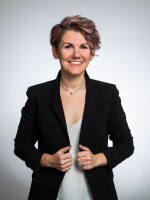
In this episode, hosts Brianna Lennon and Eric Fey speak with Bob Page, the Registrar of Voters at County of Orange. He has had a busy year when it comes to questions about the integrity of the county’s elections — including a lawsuit filed against him by the DOJ.
They spoke about how Page responds in the face of such attention, as well as how he works with journalists and spends time educating the public to rebuild trust in California elections.
High Turnout, Wide Margins Credits:
Managing Editor: Rebecca Smith
Managing Producer: Aaron Hay
Associate Producer: Katie Quinn
Digital Producer: Mark Johnson
Transcription of the episode is as follows:
Bob Page: I think the one key point I keep making with my staff is — we want to get better and we want to do things better, but don't come up with an idea that gives you more work to do. Think about ways that make us more efficient. Don't necessarily mean that you have to work longer hours so that we get things done
[High Turnout Wide Margins Introduction]
Brianna Lennon: Welcome back to another exciting episode of High Turnout Wide Margins. This is Brianna Lennon. I am the County Clerk in Boone County, Missouri, and with me is my co-host —
Eric Fey: Eric Fey, Director of Elections in St. Louis County, Missouri.
Brianna Lennon: And today we're really excited to have —
Bob Page: Thank you guys for having me on. I'm Bob Page. I'm the Registrar of Voters for the County of Orange in California.
Brianna Lennon: First, we'll ask the question that we ask every guest that we have, which is, how did you get your start in elections?
Bob Page: Well, I would actually go back to before I started working for county government when I was a local newspaper reporter in Ontario, California, for a publication called the “Inland Valley Daily Bulletin.” I had been a city beat reporter covering Rancho Cucamonga, but had an interest in water policy and what some of the special small water districts were doing in the community. And encouraged my bosses, my editors, one year that we should be reporting on the elections for board of director seats on our water districts, which is something the paper had not been doing, and, out of that, I ended up with kind of an interesting situation that, you know, as you do things in elections, you learn something every day. And so, as a reporter, kind of following what the process was and just trying to understand the candidate filing period, I noticed that one of the incumbents for a water conservation district, when the 5:00 p.m. filing deadline passed, had not pulled papers, had not filed. So, I called that person up and said, "Hey, did you decide to retire? What's going on?” And the incumbent said, "Oh no, no. No one ever runs against me, so I don't ever bother to file paperwork, and then I just get reappointed to the board by the Board of Supervisors.” And I went, "Oh, okay, thanks.” And I quickly put together a story letting my readers know that the filing period for that office had been extended five days to the next Wednesday, and anybody could file, and the incumbent could no longer be a candidate if somebody else did. So, he lost his seat.
So, fast forward, I turned in my press badge and went to work for county government in November 2001, and, you know, in 2004, I was asked by the CEO if I would go over for a few weeks during the 2004 presidential general election, if I could help out at the Registrar Voters office with the election — went over there, did my best to support, kind of learn what they were doing, and help out where I could. But the team — I really liked the team. They were great. But when the election was over, I went back to doing other things for the county, and in 2018, when the county's chief operating officer let me know that there was about to be an opening in the Registrar of Voters office, and if I was interested — I said, “Yes,” and that afternoon, I showed up at the office and said hello to the staff. So, it was kind of a quick transition, but it's something I've enjoyed now since July of ‘18.
Eric Fey: We had Neal Kelly on the podcast, your predecessor. And, my impression, Neal had a pretty innovative operation running there. I'm curious what your impression was upon taking this office and how you manage an office that you come into that is working relatively well? Because that's not everybody's experience.
Bob Page: Yeah, I would say obviously Neall had many many years of experience and had done an amazing job and built a reputation of how well this shop ran. So, to that extent, it was easy to come into that role because I really didn't have to make any changes per se. Had a great team, so really for me, the first thing was just getting to know who was on the team, who the leaders were, you know, what their skill set was, what they were capable of, and then giving them the encouragement to actually build off of their knowledge and their experience, and giving them responsibility.
And I think that's one of the things I've kind of prided myself [on] as a leader in both counties is — not being top down, being more collaborative, and wanting to help people blossom and grow, making sure that my leaders get training from different, you know, state organizations and and election organizations, so that they can continue to grow, because, you know — like, my Deputy Director of Operations has been, you know, I think had joined this office shortly before Neall did in the early 2000s. So, he's got a lot of experience. He's done a lot of different jobs, and I trust him implicitly to run the operations team. And I don't, you know, we obviously have discussions about strategy and goals and vision, but I'm not, you know, looking over his shoulder on a day-to-day basis.
So, I think for me, that's been the important thing: is just, you know, how do you come into a situation that's been so successful? How do you adjust the culture to your style without having things fall apart?
Brianna Lennon: I think, related to that, with the stress that I think a lot of California counties have had over the past, I don't know, five or six years specifically, and the attention that's being paid now to the operations of elections in California — how have you tackled that within your own office? I mean, I'm sure the people that work for you read the news just like you do and get feedback from people. How have you managed that?
Bob Page: Yeah, and, relatively speaking, as a local elections official, I haven't been doing this that long. I mean, July 2018 isn't that long ago, but it is a much different world. I mean, when I stepped into that role, it may not have been a real popular job to have in the community, but it didn't have the same level of scrutiny that we have now. So, that's something that, as I've gone on year to year, has changed and morphed as the media markets become more fractured, as people become more vocal, you know, it's required us to constantly be thinking about how we communicate with our our voters and educate them and and make sure that they trust what we're doing.
So, I think, I think in large part the different roles I've had, you know, starting with being a journalist and kind of understanding what those newspaper reporters and TV reporters who are out there still covering the news — what kind of things they care about, and and how I can help them do a better job to explain what we do. But I also, in the 20 years I worked for San Bernardino County, I was chief of staff to two different county supervisors — one Republican, one Democrat — so, I understand, having worked in a political office, I understand what my Board of Supervisors and the politics of what they need from me and and how they think about things. So, I think that helps me, and then, just every week, continuing to grow and learn about elections and what works and what works in other counties and constantly reviewing the law to make sure I've got it down, and bringing in people that have fresh ideas about how to communicate, I think, has been something that's been really important because, you know, I want to be a trusted messenger, but I also want to help other leaders in my community have good information, so that they can answer questions, as well.
Eric Fey: Bob, following up on Brianna's question a little bit — I want to ask about the controversy around the length of time it takes California to certify election results, and I even hate to use the word controversy because it's the law in California. The election officials in California are following that law, you know, administering accurate elections.
I want to come at this question from the standpoint of — kind of the dynamic we see with members of Congress, we kind of have the same with election officials. Like, “I trust my election official. I think the results here are trustworthy, but I'm not sure what's going on over there.” I think that that's at play a little bit here. So, from your perspective, your voters in Orange County, do you get the sense that they have the same kind of concern about the length of the process to certify the results that maybe some folks in the national media do? Or do they have a higher level of comfortability with what you all are doing and the way it's done?
Bob Page: Yeah, obviously there's a range of points of view in your communities. So, you know — and it just so happens that those who are concerned about those kind of things can tend to be more vocal. They can show up at the biweekly board of supervisors meetings and complain about the job that I'm doing, suggest that I be fired, or that things be changed. So, you know, that's — yes, you're right. Every survey result I've seen has shown that the trust is highest at the local level, and then reduces as you go farther out, as people don't know whether they trust the, you know, the next state or somebody else as much as they do their local officials.
So, you know, that comes to play in Orange County, as well, but there still are voices who are concerned about the speed at which we complete the canvass and certify the results — including from my own board of supervisors. You know, I, in 2022 when I did my first primary and general election, I had members of my Board of Supervisors who were asking, "Why is it taking as long as it is? It seems like it's longer than it used to be.” And, for them, as my bosses, it's, you know, my first approach is, “Here's the data. We're actually faster than we were in 2018,” you know? “What you're remembering is what the media used to do, which is that they had more resources, they were doing exit interviews, they had a better sense through surveys and different things about what the results will probably be, and they were projecting winners on election night. So, yeah, when, you know 20, 30 years ago, when you went to bed, you had, you thought you knew who the winner was because the media may have, local media may have called it. That just doesn't happen anymore. Races are closer because of independent redistricting in California, not drawing, you know, assembly and state senate or congressional lines based on party preference — granted, that changed with Prop 50 last year, but traditionally that commission is not looking at political party preference in the communities when they're drawing those lines.
And then, under the California Voter Rights Act, there's been a lot of shift from cities and school districts and special districts from having at-large elections for membership on their governing bodies, their city council, their board of trustees or their board of directors to being district-based, so you've got a smaller pool of voters voting, so you end up with closer races. So things end up closer, people are paying more attention now because they've been told that they shouldn't trust elections or they're rigged in some way. So that extra attention, I think, is added to it — because California, we, California counties have had four weeks to certify election results since the 1970s. This is not some new recent trend. I know people point to the fact that in 2020, we started mailing a ballot to every single voter throughout the state, and that slowed us up. But I can show data for Orange County — once we went to the vote center model in 2020, we adopted using electronic voting rosters with poll books in 2020, we've significantly reduced the number of provisional ballots that we have to process, which has meant that we get more ballots into the results sooner.
So, in 2018 — primary — it took us 14 days until we had 95% of the ballots in the count. This primary we just did in June, we hit that mark seven days after. That's a 50% improve– you know, we improved by half. The challenge is that today, as we record this, I've got 89 days till election day, a month till I have to issue military and overseas ballots, two months till I have to mail ballots to all my voters locally.
Going back to the question about innovation and the culture we have regarding innovation in this department — I think the one key point I keep making with my staff is we want to get better and we want to do things better, but don't come up with an idea that gives you more work to do. Think about ways that make us more efficient. Don't necessarily mean that you have to work longer hours so that we get things done quicker, you know, we're looking at those kind of things, we're testing right now automated signature verification software for doing the first review of the signatures on the vote by mail ballots, which other counties around us have have implemented and have found that it basically takes out about 50% of their vote by mail ballots that don't need to be reviewed by humans because it can be accepted with high confidence by the the software. So, we're looking at that right now. We're looking at our space, buying additional equipment, and whatever we can do in the next, you know, month to try to improve our efficiency.
[High Turnout Wide Margins Midbreak]
Brianna Lennon: As you've explained all of these really great administrative tools that you're doing, and continuing to have like high degrees of integrity — you're still getting pushback. Orange County is still getting pushback from the federal government, and I'm wondering if you can speak to how you have handled that, and, maybe, give some insight into why you think Orange County has ended up in this light?
Bob Page: Yeah, I think — and we can get to the DOJ request. I believe I probably had the fortune of being the first person DOJ sued trying to get unredacted voter file information back in June. Granted, my case is on, has been stayed because they also sued the state of California for the larger list, which is being considered by the Appellate Court now. So, my case has been on hold until that gets resolved.
As you know, those cases, throughout the country, every single judge has ruled in favor of the states that they don't have to turn over the non-public voter data that has driver's license numbers, social security numbers, signatures, you know, that kind of information. So you know, there's that, but then, probably the thing that got even more press nationally, for me, in the last year, was the fact that a woman in Costa Mesa, a voter, in 2021 created a fictitious voter registration and used the name of her dog to register to vote. And then, in 2021 — gubernatorial recall election — cast a ballot using that fictitious registration in her dog's name. And then, in the 2022 primary election — statewide direct primary election — cast a ballot using that fictitious registration. And just ahead, like a couple weeks ahead of the November 2024 election, she approached the then city attorney of Huntington Beach, who's now running for state attorney general, to say that her dog received a ballot and “how outrageous was that,” you know? The city attorney contacted me and I, you know, immediately referred it to the district attorney to look into, and I was quite pleased actually when, you know, less than a year later, the DA actually filed multiple criminal charges against the woman for creating a fictitious registration and casting ballots in that name. What I wasn't expecting was that people would grab onto one thing that we caught — one fictitious registration out of 1.9 million registrations, and say that was proof that I and my team do a crappy job at maintaining our voter rolls and our voter file. That I wasn't expecting. I was feeling really good when the district attorney issued a press release that they had filed charges. I was like, “Yes, they actually followed through and prosecuted this person for trying to get around the system.” As soon as I realized that — that I misunderstood that there would be this strong feeling from some that that was proof that there was a bigger problem. Then I went into my mode of looking at just kind of you know, and this isn't something that was new for this.
I had done this, going back, when I was we were conducting an election for this, a recall election for the city Santa Ana, and I came to the to the realization, after we'd mailed ballots, that we hadn't asked the city clerk to confirm the map we would use for that election, and we used the map after the district was redistricted after 2020 instead of the map that was in place when the city councilwoman was elected in 2020. And I sought direction from the City Clerk, quickly realized the city was not going to address the issue and was probably just going to point the finger at me for making a mistake — even though the legal responsibility was with the City Clerk, but I didn't want to get into that game, right? I need to be above that. I need to be impartial and trustworthy in how I conduct elections. So, what I decided to do in consultation with my PIO for the county, was, “Okay, I've had all these conversations. I got these emails. I got letters back and forth. Let's put a timeline, let's put all the documents, my communication with the city — rather than me telling reporters it's the City Clerk's fault. Let me just put it out there, and everybody can make their own judgment about what the issue was. So, that was the first time where something like that happened, where I just went all in on transparency, and rather than me trying to frame it and getting a “he said she said” type of thing, I just went back to my reporting days where documents were king for me, and I put them out there so that everybody could see them. And when I got a call from a newspaper reporter, I sent them an email that had every single document in it, and then I posted it on my website.
So, you know, in looking at that and what we put on the website, you know, I knew in putting out that answer regarding the litigation in which we said I was following the law. I strongly believe that the document, public documents I gave to the DOJ, that showed that each of the 17 voters they asked about had attested under penalty of perjury when they registered that they were citizens, and then when they told me that they weren't and wanted to cancel, I canceled them. To me, that's proof that I'm properly maintaining my voter file. I get there's a bigger political issue that's being made of this and talking points on it, but really I have to kind of fall back on what are the facts, what's the law, and provide that information in the easiest way I can to my voters and anybody else, who else is interested on my website.
Eric Fey: So, you've had more than one issue this year, which is more than enough for anybody to have to deal with, and some of the things you've talked about, I think, are the types of issues a lot of election officials have encountered — probably not being sued by the DOJ, but you know, administrative error type things are relatively common. We've all fallen victim to those from time to time. Your approach, your kind of maximum transparency approach, I think is relatively unique. Do you have any words of wisdom or lessons learned from your approach that you'd like to share with other election officials? You know, if they find themselves in a similar situation?
Bob Page: Well, I mean, it goes back to the old adage, right? Truth will set you free. So, I mean, that's where I start. Granted, just doing that without having built the relationship within your community or built the relationship through the media is going to only go so far. I mean, so that's another big part of what we do is building those relationships.
Every statewide election, I have an online briefing with reporters, and then I invite them to my office a week before, the week before Election Day to kind of get a tour and show them all the stuff that we're doing in the office to process ballots. So, I'm constantly doing those things. I'm available to reporters. When I answer them, I probably give them more information than they want. I give them citations to state law, to federal law — any way I feel like that I could help them better understand the issue. I know not all that information is going to get into their story, but I feel like it helps better shape what they do right if I'm completely honest and try to help them. Granted, I know there may come a day where I don't want to talk to them, but, you know, so far in every situation I've been in, I feel like I've got information I can give them to help them.
You know, the latest lawsuit that I was filed in was regarding a city of Newport Beach petition initiative measure that we reviewed the signatures for the city in 2025, gave our work back to the City Clerk. She presented it to the City Council that the petition was sufficient, and they put it on the ballot for this November. The city now, relooking at how that petition was circulated, believe that the proponents missed an important step at the beginning before they circulated the petition, and they're trying to get the measure taken off the ballot. I had a reporter who, because I'm the respondent in the lawsuit, thinks the city is alleging I did something wrong, right? But what I had to do is talk to the reporter and say, “Look, we did work for the city, but that — all the determinations were made by the City Clerk,” and, at the bottom, end of the day, whatever the judge decides — as long as he decides it before August 28th — I'm good with it. I will implement it. So, I'm not taking a position on this, other than to make sure you understand that I was providing a signature verification service, but, other than that, I was not determining that all the steps in the petition process were met.
So, those are the kind of things that you've got to do, and I've got to be out in the community, talking to people. This morning, I went out and made a presentation to the Newport Beach Chamber of Commerce to answer their questions. I have a whole, you know, 50 slide deck presentation that I have that talks about how voting's easy, and then all the, you know, more than 125 steps that we take every election to ensure the elections are secure and accurate. And I got through the first slides kind of talking about the key dates in the election and when ballots were going out and those kind of things — and then hands started going up. And so, granted, I didn't go through my 25 slides on election security, but we talked about everything that was in those slides because those were the questions people had. And that's, you know, that's my approach when I do [go] in the community is, “Hey, I've got a presentation, but if you guys want to, just want to talk, you know, let's talk. You know, raise your hand. Ask a question, and I'll answer it.”
So, you know, it's all part of that, and we had to do the same thing in 2025. We were required by state law to update our election administration plan — we have to do that every four years — and given this current environment and the issue with the the woman whose dog, you know, who cast a ballot for her dog, the DOJ lawsuit — all these things I knew were potential landmines for going out to the community because I was required to consult with the community, and we want to create situations where we can have good conversations. So, rather than having a town hall where a line of people are standing at a mic, yelling, you know, we created workshops. We had stations. We had more one-on-one conversations, and I believe that was successful because we thought about how we wanted to talk and how we could create an atmosphere that was conducive to actually productive discussions.
Brianna Lennon: I think there are oftentimes a desire — like, election officials, will have a desire to do this kind of transparency, and then they put information out there, and they hear crickets. And part of trying to figure out how to improve their transparency is also getting people's attention, and then also timing it correctly so that you're not getting inundated with things when you don't want to be. And I imagine your experience as a reporter helps kind of make it more compelling for people to engage with you, but can you give some advice on that side of things?
Bob Page: Yeah, I mean, really, for me, it's just throwing any idea that comes up at the wall and seeing what kind of reaction we get. If it doesn't work, we move on. We try something different. The thing we tried in the primary election that we did get a better engagement with our community on was doing — and these are things that other counties have done. So, it's not something novel that Orange County just, you know, figured out — but we did vertical short form 30 second videos. And because it was only 30 seconds, it was really not a whole lot I could say. And so, we started with this plan, “Okay, how do, what do we, what's the content for these videos, and what can we say in that, you know, in five sentences that will be beneficial and get people's attention,” and then built backwards.
So, you know, I decided I wanted the message to be about all the different measures we put into place for security and accuracy in our elections, but because it was only 30 seconds, I knew I had to have some place for, to send people to get more information. So, we had to think about what's on our website. “How do we ,you know, how do we come up? How do we present the list of items that we do?” So, we spent a good month just creating the web page for this, and, right? You know, brainstorming all the different things we do to see what number we could say. We originally thought we should definitely be able to hit 100. I think we got up to about 140 or so, but I still say it's more than 125. But, you know, it's just thinking through — you've got to have that goal of what you want, you want to do, and then you got to work backwards to, you know, you can't just jump in, right? So, that was key. And it was making sure that website was up with good information about all the different things that we do to secure and have accurate elections.
It's just needing to be flexible — we have our plan. We have our set things that we do. The set messages we need to push out on social media every election, the stories that we're going to put in our twice a week electronic newsletter that we email out. But every election, I'm always thinking about what new can, what's something new that we can do that's not a lot of work?
Brianna Lennon: I guess it's more like Eric, who is appointed — I'm elected, and so, I don't have to, I don't have to make a whole bunch of people within county government happy. I just have to make voters have a good experience, and I think that that's important. But you have a Board of Supervisors. How does your Board of Supervisors, or how do you work with your Board of Supervisors to get their buy-in for these kinds of things? Or for them to back you up when you do get things like sued by the DOJ?
Bob Page: It's been mixed recently. When I first got here in 2022, I felt like I had unanimous support of the members of my Board. There's been new people added to the Board. There's been new things that have happened around elections, as well as on our Board with one of our former supervisors being convicted of some corruption and kickbacks, which has created some issues and caused — you know, when you have those kind of situations in government, some level of corruption, you'll typically see the pendulum swing to the Board of Supervisors wanting to have their hands in everything and wanting to be overseeing more than they would normally do, so that they can catch and make sure it doesn't happen again. But yeah, that was something that my Board of Supervisors wanted me to do — to, in their mind, that was important for building more public trust back in the process. And I saw that wisdom. So, granted, I knew it wasn't going to really come of anything, in terms of finding additional fraud, but it was something we could do to provide that assurance to the Board.
So, I would say overall, though, my Board of Supervisors has not been overly interested in having long discussions about election administration in front of them and having a line of people to speak to them about it. They've been comfortable with having me do the public outreach and the workshops and those kinds of things. But, from time to time, I do have to go to them — I'm going to be going to them on August 11th to ask them to declare the winners and nominees from the primary election for the county offices that they have jurisdiction over. So, I expect there'll be some members of the public who will demand that they not certify the election results, even though that's not what I'm asking them to do. Because I certify the election results at the end of June, the Board doesn't certify it. They just receive the statement of votes and then they declare the winners. If I think there's potentially an issue that I might have with, like, a city clerk or something that could then rise to the level of a city council member who might then call the supervisor to complain about a decision I made — I'm going to make sure that I quickly brief the Board about that issue, so that they don't get caught off guard with that call. So, you know, that's part of my communication plan, as well, is keeping the CEO — who's my direct supervisor and my appointing authority, and the Board apprised of things that have a political issue attached to them.
Brianna Lennon: You've been listening to High Turnout Wide Margins, a podcast that explores local elections administration. I'm your host, Brianna Lennon alongside Eric Fey. A big thanks to KBIA and the Election Center for making this podcast possible. Our Managing Editor is Rebecca Smith. Managing Producer is Aaron Hay. Our Associate Producer is Katie Quinn, and our Digital Producer is Mark Johnson. This has been High Turnout Wide Margins. Thanks for listening.