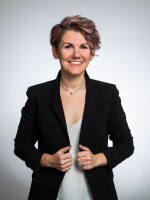
In this episode, hosts Brianna Lennon and Eric Fey speak with Seth Bluestein. He’s the lone Republican Commissioner on the three-person Philadelphia Board of Elections.
They spoke about the scrutiny Philadelphia has received during the last few election cycles, as well as how that attention has influenced the way they are running elections in the city.
Plus, Bluestein shares some interesting tidbits about the state's system of electing some members of a polling location’s staff.
High Turnout, Wide Margins Credits:
Managing Editor: Rebecca Smith
Managing Producer: Aaron Hay
Associate Producer: Katie Quinn
Digital Producer: Mark Johnson
Transcription of the episode is as follows:
Seth Bluestein: Everybody understands why they're doing the job, and thankfully they more or less stayed out of the press. A lot of the death threats and harassment were aimed at the commissioners and the deputy commissioners, so we kind of took on the brunt of that, and we've been able to kind of isolate the staff from those situations.
[High Turnout Wide Margins Introduction]
Brianna Lennon: All right, welcome back to another exciting episode of High Turnout Wide Margins. My name is Brianna Lennon. I am the County Clerk for Boone County, Missouri, and with me is my co-host —
Eric Fey: Eric Fey, Director of Elections in St. Louis County, Missouri.
Brianna Lennon: And today we're really excited to have —
Seth Bluestein: I’m City Commissioner Seth Bluestein from Philadelphia.
Brianna Lennon: All right, so we are really excited to talk to somebody from Philadelphia again. You're our second person from Philadelphia, and I think that it's been enough time that I, we would love to get an update of how things are going there, but we also want to learn more about your path to elections. So, if you just want to share how you got involved in elections in the first place.
Seth Bluestein: Yeah, I mean, like most of your guests, I didn't really plan to get involved in elections. I’m born and raised in Philadelphia, went to Penn for undergrad and grad school, and while I was at Penn, I worked on a number of political campaigns and got involved in local Republican politics in Philadelphia, which is an interesting choice given the dynamics of the registration numbers. And I worked on the campaign for Al Schmidt, who you referenced as a former guest of yours on the podcast, and he was running for city commissioner. In Philadelphia, we have a bipartisan Board of Elections. It is two Democrats and one Republican, and he was running for the Republican seat back in 2011. So, I ran his field operations for his campaign and graduated with my Master’s of Public Administration at the same time. So, when he was getting sworn in, he brought me on as his deputy commissioner, and I worked with him for 10 years, from 2012 until 2022, running elections in Philadelphia as the deputy commissioner. And when then Commissioner Schmidt stepped aside, first to go work at a nonprofit good government group called the Committee of 70 in Philadelphia, and then he was nominated to be the Secretary of the Commonwealth of Pennsylvania. I became commissioner and stayed on, and then ran for my own term back in 2023.
Eric Fey: So, Seth, a lot of folks listening are very familiar with, well, at least in public, what transpired in Philadelphia and in Pennsylvania over the last few presidential elections. Pennsylvania, obviously a swing state — a lot of attention, and a lot of that was centered on Philadelphia. So, kind of catch the listeners up to what's going on now. Do you anticipate this midterm being contentious again, and how's it going in your office? How's the staff at the election office there in Philadelphia?
Seth Bluestein: I think a lot of what transpired over the last six to eight years is really important to keep in mind as we talk about how we're preparing for the 2026 midterm elections because a lot of the change in Philadelphia, and Pennsylvania more broadly, didn't start in 2020. It started earlier than that, back in 2018, Governor Wolf, at the time, decertified all of the voting equipment that was used in Pennsylvania, and required that we procure new voting equipment that had a paper trail. Philadelphia used to have DRE voting machines — direct recording electronic machines. There was no paper ballots prior to 2019 in Philadelphia. So, in 2019, we implemented a new voting system that had a paper ballot associated with every single vote that was cast, and then, of course, everyone saw what happened in 2020. At that same time, the Pennsylvania legislature passed Act 77, which allowed for no-excuse vote by mail ballots, which was also a new thing for Pennsylvania. So, all of those things combined with the pandemic and the political environment in 2020 led to what everyone saw at the Pennsylvania Convention Center — where we were counting ballots for the entire week, and the whole country was waiting on, you know, the determination on who won the presidential race.
So, that background is really important because it has informed a lot of what we've done over the last five years in preparing for this past presidential in 2024 and preparing for the upcoming midterm. So, right now things are pretty steady, you know, it's a steady state, things are going really smoothly. We've taken all the experiences and the lessons learned from the past six years, and we're applying them to the midterms. So, I feel pretty good about where we're at.
Brianna Lennon: So, one of the things that I think you referenced too about, you know, everything that happened in 2020 and 2021 is also that even when things were implemented well and were done correctly, there was still a lot of pushback or questions or concerns — unfounded or otherwise. How have you seen that impact, you know, maybe not all of Pennsylvania, but at least Philadelphia?
Seth Bluestein: Well, following the 2020 election, there was a lot of turnover across Pennsylvania when it came to elections officials deciding to retire or not run again. In Philadelphia, I made the opposite choice, because when Commissioner Schmith left and I was interviewing with the mayor's chief of staff for the appointment to finish out his term, the first question I was asked was, “After everything you just went through in 2020, why would you want to keep doing this job?” And my response was, “It’s because of 2020 that I need to keep doing this.” I didn't want to give up the opportunity to have an experienced bipartisan board of elections in Philadelphia. Something that was so critical in defending the work that we did throughout that election cycle, and, to me, it was really important to continue doing that work for as long as the voters want me to do it.
Eric Fey: So, Seth, you obviously have a very strong, you know, public service motivation. Has it been difficult for all the staff there in your office? And you said there's a significant amount of turnover, have you been able to keep folks on now and keep them motivated?
Seth Bluestein: Yeah, at the staff level and at the poll worker level, things have been going really well. Everybody understands why they're doing the job, and thankfully they more or less stayed out of the press. A lot of the death threats and harassment were aimed at the commissioners and the deputy commissioners, so we kind of took on the brunt of that, and we've been able to kind of isolate the staff from those situations. So, we've kept a pretty steady state on keeping employment, and the people who are here running our operations are very experienced.
Brianna Lennon: And, speaking of that, I think there have been a lot of election officials that have tried to kind of lay low. I think, putting 2020 aside, really, over the past couple years, it seems to be a new era of elections policy challenges and misinformation, disinformation that has a really big impact, and a lot of election officials have, I think, decided, you know, “I don't want to be the subject of ire for this. I don't want to push back,” you know, “hopefully, laying low will mean that we end up in a situation where this blows over, and I can just keep doing my job quietly.” How have you decided to approach — I mean, being in Philadelphia, I think, is very visible. You're in a large city — How have you decided, or have you made an intentional decision to, like, be out and speak on these things?
Seth Bluestein: Philadelphia has been in the crosshairs of the national political eye for a long time. So, the way I look at it is, you have to be very thoughtful about when and how you respond to things related to elections because if you just keep your head down and don't respond at all — I don't think that's doing justice to our voters and the integrity of the work that we're doing. But, at the same time, you don't want to just respond to every bot on the internet who's saying things that are just outlandish. So, in 2024, I had to respond a few times to social media posts about how elections were being run in Philadelphia — whether it was Elon Musk or the president. To me, it was important to respond with the facts, especially given my role as the Republican commissioner in Philadelphia because I'm in the room seeing the work being done, helping run the elections. So, when it comes time to respond to people who are in my party or supporting candidates who are in my party — it's important that they hear from me about how things are actually going. So, when there's misinformation about excess votes coming out of homeless shelters or allegations of massive cheating, like, that deserves a response, and I'll never have the same bully pulpit as people of that stature, but I don't think it can go un-responded to.
Eric Fey: Seth, do you feel any — I don't know how to phrase this question, but, as you said, you're one of three commissioners. You're the only Republican on the commission. Does that put you in a different position at all in terms of the public outreach and some of the debunking you have to do?
Seth Bluestein: Well, all three commissioners work together to do community outreach and voter education, and responding and debunking mis- and disinformation. So ,we all are aligned on those issues, right? And when we're voting on polling place changes or, you know, designing the layout of the ballots, like, it's not really even partisan in how we approach our jobs. There may be differences of opinion or perspectives on how we handle it, but those are just normal workplace opinions and differences. I think the thing that really matters here is — the public will expect a Democratic election official from a Democratic city to respond and defend the election. It's important to have that response also coming from somebody from the minority party. In Philadelphia, it is seven to one Democratic to Republican, but that doesn't mean that we shouldn't have a role to play in how the elections are being run and then defend the work that we're doing. So, our voice might have outsized weight compared to our registration numbers because the public wants to know that there's a Republican in the room, and then to hear from that Republican that things are being run well.
[High Turnout Wide Margins Midbreak]
Brianna Lennon: What's some — because you, as you said, you followed in the footsteps of Al Schmidt, who's now serving in a higher role in elections. What's some advice that maybe, maybe not necessarily from him, but in shouldering these responses, in being thoughtful about how to address these things that you've gotten that you think is something that other election administrators should hear?
Seth Bluestein: Yeah. Well, Secretary Schmidt and I are good friends. We live down the street from each other, you know, I see his kids all the time. He's a mentor of mine. I was his chief of staff for years, throughout all those difficult times. The advice that I get from him and from our other colleagues that we're close with is, “Just do good things.” If you always start from the premise of doing the good and right thing, then everything else will fall into place. So, I model my responses and how I do the job based off of that commitment of — you come in to do the job, make sure elections are being run well, and that means that every eligible Philadelphian is able to register and participate and vote and make their voice heard, and that when we need to shore up the security of the operation, we do that. We make sure everything's accessible and we do it the right way, and then you stand up and defend it. And, at the end of the day, what matters more than anything else is doing the good thing and not worrying about the political ramifications.
Eric Fey: Seth, I want to switch gears just a little bit. You mentioned earlier that leading into 2020, that election was precipitated by some legislative changes that affected the way you administer elections, in terms of the technology you use, you know, mail voting rules, things like that. Has that stabilized somewhat, or have you all sought other changes since that time to improve on things you learn from that election? I guess, overall my question is: Is the Pennsylvania legislature receptive to you and other local election officials and what you guys need?
Seth Bluestein: Well, Pennsylvania has, I believe, the largest divided legislature in the country. So, the state House is a one-seat Democratic majority, and the state Senate is a very small Republican majority, and we have a Democratic governor. So, getting anything through the legislature right now is nearly impossible. So, immediately following the 2020 election, they had some small changes that they made — most of that was about outside funding for elections, given everything that we received in 2020 and the opposition to it afterwards. But the changes that we need, like technical fixes, are not getting through.
For example, in Pennsylvania, when they created the no excuse vote by mail apparatus for the first time, they didn't allow us to start pre-canvassing those ballots until Election Day. So, if we received, in a presidential election, 400,000 mail ballots and they're inside secrecy envelopes, and those secrecy envelopes are inside the outer mail envelopes — we can't even start touching them until 7:00 a.m. on Election Day, which means we then have to handle 1.2 million pieces of paper — the ballot and two envelopes — all throughout that day. And, we are now required to have a 24/7 operation, which we did during the presidential election anyway, but we can't stop going through those ballots until we've gotten through all 400,000 ballots. So, that type of fix is really important for Philadelphia and counties of our size, and some of the smaller counties may not need it, but I think the legislature isn't really looking at the broader picture of: They want results faster, and obviously we need to maintain the accuracy of the count, but then they're not giving us the tools to do that in a presidential year the right way. In 2020, when I was the deputy commissioner at the Pennsylvania Convention Center counting the mail ballots — and I'm not exaggerating here — when I woke up Tuesday morning for Election Day, I didn't go back to sleep until Friday, and the presidential race wasn't called until Saturday morning. So, like, we had shifts of temporary workers where we had hundreds of temporary workers every eight hours cycling through at the convention center from Tuesday through Friday, and I was there the entire time, in a suit, standing there in the same spot, not sleeping. So, those are the types of fixes that we need from the legislature that we haven't been able to get.
Brianna Lennon: What's been your response — I mean, I know how our state association is very tight and cohesive, but the diversity of size and population and all that means that every county has different challenges. So, some things are more of a priority than others, and you mentioned that some changes may not be required by the smaller counties, but still would be helpful to have. What's been the response from some of your colleagues in Pennsylvania, like, are they also trying to make these changes as well, or is a you know kind of a quiet time?
Seth Bluestein: Well, Philadelphia's structure is a little bit unique compared to the other counties in Pennsylvania. So, we have 67 counties, and most of them have three elected commissioners who manage the entire county, and those three commissioners appoint an election director, and that election director runs the elections.
Because, in Philadelphia, our three commissioners are full-time elections officials — we're a little bit more involved in the election side of things than our colleagues, commissioners in other counties. That being said, the County Commissioners Association has been in favor of those types of changes that would make it easier for the large counties. I think the smaller counties understand that it wouldn't really harm them. They don't have to start earlier. They could still start on Election Day if they wanted to. So, it's just adding options that the larger and mid-sized counties could do if they chose to, and our elections official associations are actually divided — we have an Eastern association and a Western association. So, they meet together once a year, but they're not really interacting all that much across the state, so that makes it a little bit harder for the elections directors to really all get on the same page, I think, but most people who are involved in elections understand the basic types of changes that we need to see. It's just about getting that information to the legislators and convincing them that it's important enough for them to actually move forward through the process.
Eric Fey: All right, Seth. I want to ask my favorite Pennsylvania question. I asked Al this when he was on the podcast. I ask any Pennsylvania person whenever I see them. I know you all — and I don't know all the particulars — but there are some poll workers that are elected in Pennsylvania. I think this is wild, but is that like a sacred cow? Does that — that just is what it is, or is there any talk ever of changing that process?
Seth Bluestein: Yeah, it's funny. This is one of the questions I get more often than anything else when I'm talking to elections officials from across the country, because they just think it's insane that we're electing polling place officials. My understanding is that they are considered constitutional officers, meaning, I think, we would need a constitutional amendment to stop electing these positions and to make them appointed and recruited by the commissioners instead. So, at the polling place, we might have five or six elections officials from the judge of elections down to the machine operator, and three of the five positions are elected. One of the positions is appointed by one of the elected officials. The minority inspector gets to appoint the clerk, and the only position that we are actually responsible for, that we get to recruit and train and appoint, are the machine operators. Other than that, it's really in the hands of the voters, and they get to elect their neighbors to run their elections.
Eric Fey: Just as a quick follow-up, these elected polling location officials you're mentioning, are they required to have any type of training or anything at some point?
Seth Bluestein: The election code does say that they are required to attend training the first time before they work. I'm not so sure how enforceable it is, and they don't have to come back for repeat trainings, if they don't want to. Now, we usually get somewhere between 60% and 70% compliance in our training program. So, we will offer multiple trainings prior to each election. We compensate the poll workers for coming to the training. We make it available both in-person and online. So, there's lots of options, but I can't force them to attend, and I remember, I got my start when I was on Penn's campus as an undergrad — I served as an inspector of elections, on campus, in the 2008 presidential election as a polling place official, and I went to the training and I learned how to operate the machine and and sign people in, and it was a great experience. And then when I started working as a deputy commissioner, I reminded those employees who gave me that training when I was a freshman in college, like, "Hey, you may not remember this, but I actually took this training from you four years ago.
Brianna Lennon: I'm curious, with all of the national attention that's been on Philadelphia, and the fact that the way that you have your poll workers serve and they have more skin in the game, I think, if they're having to like elect themselves and do all of that work — do you think that that's made a difference in the level of confidence that voters have had because of the the investment that your poll workers have?
Seth Bluestein: I think it's pretty common that the voters of a particular county or jurisdiction have a lot of trust in that county's elections, right? So, you know, when a voter goes to a polling place and they see their neighbor, somebody they know, you know, their kid's soccer coach or the older lady who lives on the corner — they trust that those polling place officials are running the election well, and by and large, they do a really good job. It's really about how do we build the trust that Philadelphia's elections are being run well, so that people outside of Philadelphia also have that faith and that trust, and that's a lot of the work that I'm doing is trying to communicate these stories and show how our audits are accurate and how we do testing of the equipment before the election, so that not only are the voters in Philadelphia trusting our elections, but people outside of Philadelphia will also trust them.
Eric Fey: Seth, can you talk a little bit about what type of post-election audit you guys have to do there?
Seth Bluestein: Yeah. So, after every election in Pennsylvania, we do two different audits. In the Pennsylvania election code, it requires a 2% audit. So, we will take either 2% or up to 2,000 ballots, and we will randomly select them and hand count those ballots to ensure that the hand count matches the tabulated results.
We also participate in a statewide RLA [Risk-Limiting Audit]. That's a little bit newer, and, you know, the state will run the RLA. We will pull the random ballots that they assign us from the batch, and then send those results that we hand count to the state, and then they'll compare it with the results from the rest of the Commonwealth, and then they'll determine whether or not the RLA meets the requirements that they set.
And all of it's open to the observers. So, we have canvass observers and, at our warehouse, from any candidate who wants to be there or have an observer —both major parties, minor parties — everyone's allowed to have somebody present at the warehouse observing the original count and both audits, and we film it. So, we also live stream what we're doing. So, on our website, we will show the entire canvass and the people doing the audit on our website.
Brianna Lennon: Do you feel like with all of that going into the November election this year, the midterms elections going into 2028 — are you, I know you said that it has been, things are going well, people are doing what they're supposed to be doing. Anticipating the actual election — what are your concerns at this point?
Seth Bluestein: My main concerns about the upcoming election cycle are people being afraid to participate. So, if there's lots of news about the potential of federal agents being outside of polling places, or if they just more broadly don't feel safe — they may choose to sit it out. And even if nothing is happening in Philadelphia, because of the way social media is, if one incident occurs anywhere else and it spreads on social media and people in Philadelphia see that, they may choose not to come out. I think that's my main concern. Secondary to that, I think we need to keep paying attention to what's going on with the postal service and everything that's moving forward on that side of things because, in Philadelphia, if we have 150 or 200,000 mail ballots being mailed out for this upcoming election, it's important to know that those ballots are being received by voters and that they have opportunities to return them. Now, we've set up three dozen drop boxes around the city. We have 10 satellite election offices, where voters could go request their mail ballot in person, receive it, and put it in a drop box all in one visit. So, we're trying to provide lots of opportunities for people to participate, but again, I don't want them to be afraid to request a mail ballot if they need one because of what they're hearing about the federal environment outside of Philadelphia.
Brianna Lennon: You've been listening to High Turnout Wide Margins, a podcast that explores local elections administration. I'm your host, Brianna Lennon alongside Eric Fey. A big thanks to KBIA and the Election Center for making this podcast possible. Our Managing Editor is Rebecca Smith. Managing Producer is Aaron Hay. Our Associate Producer is Katie Quinn, and our Digital Producer is Mark Johnson. This has been High Turnout Wide Margins. Thanks for listening.