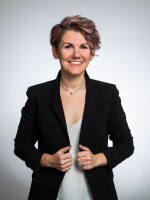
In this episode, hosts Brianna Lennon and Eric Fey speak with Carly Koppes, the County Clerk & Recorder in Weld County, Colorado, and Lori Mitchell, the County Clerk & Recorder in Chaffee County, Colorado. Both have held many leadership positions within the Colorado County Clerks Association.
They spoke about what the association has learned about responding to a crisis — in light of a Colorado clerk being convicted of numerous voting related felonies in 2024. They also addressed how that crisis brought Colorado’s clerks closer together, as well as how they are trying to pass down institutional knowledge to clerks who are just now entering the field.
High Turnout, Wide Margins Credits:
Managing Editor: Rebecca Smith
Managing Producer: Aaron Hay
Associate Producer: Katie Quinn
Digital Producer: Mark Johnson
Transcription of the episode is as follows:
Carly Koppes: Frankly, and in this day and age, in the elections’ world — you really just can’t stick your head in the sand. We just don’t have that option anymore. It is really important to know, not only what is being said and spun around in Colorado, but other states.
[High Turnout Wide Margins Introduction]
Eric Fey: Welcome back to another extremely exciting episode of High Turnout Wide Margins. We've got two guests on this episode. I am Eric Fey, Director of Elections in St. Louis County, Missouri, and my co-host is —
Brianna Lennon: Brianna Lennon, County Clerk in Boone County, Missouri.
Eric Fey: And our two Colorado guests — I don't know, Carly. You want to introduce yourself first?
Carly Koppes: Sure. I'm Carly Koppes, and I'm the Weld County Clerk and Recorder, and now, again, the president of the Colorado County Clerks Association.
Eric Fey: And Lori —
Lori Mitchell: I'm Lori Mitchell. I'm the Chaffee County Clerk and Recorder in beautiful Salida, Colorado.
Eric Fey: Awesome. Well, thank you both for being with us today. As those of you who have listened to the podcast before — it's a small but select group — know we always start with the background of the guests. So, I don't know — maybe we'll start with Lori. Would you mind sharing with everybody how you became the county clerk where you are in Colorado?
Lori Mitchell: Sure. So, this is the town I grew up in, and my parents grew up in, and we have generations here. I have kind of a diverse background. You don't, I guess, you don't plan to be an election official — when I got into it, anyway. So, I was a golf professional. I was a PGA member and a club pro, and I did that for about 11 or 12 years, and I went back to school, and I have a degree in journalism, and I became a commercial photographer. Went to an art school, and then I did that for 15 years. I was laid off from my company in Missouri, and I moved back to my hometown just to visit my parents— well, came back to visit my parents and ended up moving here, and then when the job came open at the clerk's office for an elections deputy, I applied, and then when the clerk retired, I ran, and I'm now in my third term.
Eric Fey: That is awesome. I think this is the first golf pro we've had on the podcast. That's awesome. Carly, you want to share your background?
Carly Koppes: Sure. Lori is way more cooler than I am. So, I started in elections in Weld County, Colorado, when I turned 18 — literally one month after I graduated high school. My grandmother, who was very involved with elections my whole entire life, had called me and said, "Hey, the clerk is looking for some temporary workers for the 2004 presidential, and if you want to do this, don't embarrass the family.” So, I decided to go ahead and say, "Sure, Grandma, I'll go in as a temp worker. Promise I won't embarrass the family.” And again, I had no intentions to stay. It was just a temporary job. I was building up more money for college because my plan was to go and be an equine and water lawyer. That was the whole goal of my college career and all that type of stuff. And so, I've been teasing everybody and saying I've been on a 22 year detour of my original plans because I worked that presidential election, was offered a permanent position, went ahead and accepted it, worked in the office for 10 years, and then the clerk prior to me was term limited out. And, at 26 years of age, I was kind of looking around, and nobody was stepping up, and so, I was like, "Well, you know what? Why not? Might as well.” I already know the office. I know elections like the back of my hand. I know the other two departments that I run, motor vehicle and recording, as well. So, I was like, 'Well, might as well just put my hat into the ring and see if anybody else would step in.” At the end of the day, I won that election, and I was sworn in at the age of 28, becoming the youngest curriculum recorder in Weld County history, and one of the youngest in Colorado, as well, at that time, and then now I'm in my third and final term with Lori. So, her and I came in at the same time, and I knew her and I were going to be the best of buds because we are just super fun and entertaining, and that's how I am still here and looking forward to the last few months of my term.
Brianna Lennon: So, we've had a number of guests from Colorado, you know, one would think that we just really wish we were Colorado, and I don't know that they would be totally wrong, but the elections there are really, really they're wonderful. There's a lot of policies and processes that Colorado has paved the way on, and I know that both of you have worked really hard to make sure that Colorado continues to be the gold standard, but there's obviously been a shadow cast over Colorado in the past few years, and I know that that has been what has received most national attention it seems like lately. So, I wondered if you could both kind of touch on what is it like running elections in Colorado right now?
Lori Mitchell: Well, I think, yes, it's been very difficult, and we did get some attention for the wrong reasons. But I think what I'm most proud of is, for the most part, all of the clerks and the offices have stuck together. We've continued to just put our nose down and keep plugging away every day. Our citizens depend on us. They depend on us not only for elections, but like Carly said, for motor vehicle and for recording their public documents. We're kind of like the face of our counties, and we needed to hold strong, so we leaned on each other. Got a lot of support from everybody in our group, and then we've weathered the storm, I think, rather well. I think we have, you know, obviously there's ups and downs, but for the most part, our citizens trust us, and I hope that continues.
Carly Koppes: Yeah, I would just add that, you know, it's every election, depending on what is going on at the national level, we usually get some type of emails or social media posts made about us, and obviously, a lot of things around that one kind of shadowy figure that we have here in Colorado. She just keeps coming back like a bad penny, essentially. And so, my role as president of the association has been, again, just kind of going around and making sure that all the rest of the clerks are supported, but really also talking to media people and making sure that everybody knows that we are open to any questions, that we aren't trying to hide, we're not trying to run from anything, and we have a strong system here. And so, what we've tried to do is really welcome people in, and I've actually converted quite a few of the election deniers to big time supporters because I did open my doors. I did bring them in. But it definitely is challenging because I kind of feel right now that we're on this rinse, repeat, and recycle moment — especially now that she has been released from custody, and she's just saying the exact same stuff. And so, we're just having to regurgitate things that we have been saying for the past six years.
Eric Fey: We certainly don't want to make the whole episode about this person and those past events, but I guess the angle I want to approach it from is your association. And so, you did have this clerk that broke the law, that went to jail — that's unprecedented, obviously. But how did your association approach it? And I ask that because your association, I think, is one of the stronger ones in the country — you've had an executive director for a longer time than I think maybe any other state association, and you all seem to to really work and communicate well together. So, I think that's a different dynamic than most other states. So that's how I'd like to approach it. I know, Carly, you're the president right now, so how have you all, as an association, dealt with that?
Carly Koppes: Yeah, I just feel like — I've been president both times — so, in 2021, when the whole thing was exposed about what she had done, I was the president of the association, and here I am again, and she's out, and I'm like, "Gosh, darn it! I just keep, I just like an omen or something. I don't know,” but the one thing that we have really tried to focus on is wrap— like Lori mentioned earlier — was really wrapping our arms around everybody else. Because I will never forget the moment that she walked across that stage in South Dakota, like that was the biggest professional gut punch I've ever had in my life. And the thing is, I had an inkling even before that. I kind of knew it was gonna be her walking across that stage when they started talking about it, unfortunately. And so, the biggest thing is, is we've allowed space for everybody to have their feelings, and we've allowed space for everybody to know it's okay to go through the emotions, and we're all here, and we're all probably living it the same way, and to really make sure that everybody, at that time in 2021 — because we had a whole different set of clerks than we do now, we've had a big transition with people not deciding to run after the 2020 election, and then retirements and so forth — and so, the first time around, it was really making sure that we were checking in on all of our clerks, making sure that we were doing a good strong message that was going to be simple and simplistic for everybody to be able to speak to, and be as calm and collective and professional and essentially the adult in the room, as much as we possibly could. I mean, it was very challenging. I'm not going to lie. I mean, there were definitely times where I wanted to scream and yell, but I knew at the end of the day that just wasn't going to be the best that we needed to prove at this time. And so, it was just really — that was the focus then, and now we have a whole bunch of new different clerks that didn't live through in 2021, and so again, we're really just trying to reeducate and let them know exactly what happened in 2021 and why our response was there, and just continuing to carry the same message forward.
Lori Mitchell: Yeah, I think the association was very important, and it was all about wrapping our arms around everyone, you know, especially the clerks of her same party. I mean, they took it the hardest, and we tried to recognize that. And we were constantly sharing information about what actually happened — not necessarily talking points, but trying to make sure everybody knew exactly what happened and how, you know, it was crazy talk. It wasn't anything real, and how it was against the law, you know, taking an image of your computer and all the unredacted ballots of voters with their names on it or whatever. It broke so many, it broke so many laws. So, we tried to make sure we got proper information out to all the clerks so that they had talking points if they were getting questions from their community about what actually happened because there was just a flooding of the zone of misinformation surrounding it. And our clerks association is so strong — we actually have, you know, there was ethics violations and things like that, and so, we have a whole process for that, which we did to remove her from our association, and so, I think that was important. And if there wasn't, I mean, if we didn't do it then, there probably wasn't another time to exercise that. That's the only time I know of that we've done that. But, like I said, it was just constant communication and making sure that folks knew that this was not cool and that was the wrong thing to do.
[High Turnout Wide Margins Midbreak]
Brianna Lennon: Moving away from that particular incident, but still about the association — you're one of only a few associations that have an executive director, and I notice that your executive director does put out statements on a pretty frequent basis, reflective of the association's viewpoints, and they are firm statements. You know, I think it probably is not oversharing to say when things happen and you try to create a communication by committee, there can be times where, you know, you have some people that really want to say something, and then others will talk you out of it, and you end up not saying anything, or you put out a statement and then shy away from follow up questions from the press or things like that, and so then the statement is just kind of out there in the ether, not doing much of anything.
But I feel like, from an outsider's perspective, you guys have threaded the needle between making statements that are taken seriously and then backing them up when asked about them, and I’d love to know how you all got to that point? If that is how it feels to you as well? Or if it's just something that, you know, “Matt does that,” and we don't know, we just trust him?
Laughter
Carly Koppes: We definitely — Lori and I have, because Lori's a past president, so she worked with Pam Anderson when she was the executive director — but one thing is, I love and adore Matt, and we have a lot of conversations, and we are very much each other's check and balance to make sure that we're staying as much as like — we try to stay the adults in the room, and so what can we frame it around? Because there are definitely times where Matt and I are like, “No, let's hammer harder,” and thank goodness we have our executive board that are like, “Well,” you know, “you two are kind of fighters, so let's just back it off just a touch.” And so, it's a really good balance that we have on our executive board.
And so, Matt will talk with me, and we'll kind of frame some messaging, and then he'll go and work on it some more, and then we'll bring it to the full board to have some review and conversation around it to make sure that we're still setting a really good tone that we want to. And then we will bring our whole association together, so all clerks together, to say, "Hey, we're going to give this to a vote.” So, if you aren't comfortable with this, as a full association, then us as the executive board will release this. And even if the executive board isn't 100% sure, they don't want their name on it, then it's like, "Okay, then it's me and Matt that will go ahead and release this and put our name on it.” And so, it's been pretty collective — we all understand how important it is that we do have a voice in this moment, that we are setting a good tone, that we are following up and backing each other up because we have some smaller clerks that have just faced some just absolute horrific things, and us, as the association, feel it is our responsibility —
Lori Mitchell: Yep
Carly Koppes: — that no matter if you're a big clerk or a small clerk, we're going to be there.
Lori Mitchell: Yeah, it's been a long time coming, too. The association, when we first got an executive director, that was before my time, somebody was really, you know, thinking ahead, and so, it's just trying to professionalize what we do, and we keep adding more things as things come up.
So, the executive director is basically the event planner, too. Well, now we have somebody that does that. Then we've added, you know, we have a lobbyist that helps us at the legislature and just helps us navigate, you know, day to day things that come up, and then we've added a professional communications team, too, that we contract with, and that just helps us even get our message — folks that have contacts with all the media getting to the right folks, getting the proper message out, bouncing things off of them. Not everything has to go through them, but it's always — they have great ideas. That's their business. They know so much more than we do about creating, you know, short videos and just different things like that. But, like Carly says, some of these smaller counties, I mean, we had a fire bombing, we had we had all kinds of crazy stuff, and they're in the middle of it, and they don't have a comms team, or they don't have this or that, and it's so nice to be able to depend on Carly's leadership and Matt's — who have been there and they're just on it. They're like, “Okay, we're going to do this. We're going to do this. We're going to do this. Help them make even holding statements.” Anything that comes up, it's almost like a rapid response team, and we're really proud of what we've built.
Eric Fey: People feel there's an expectation now, in the press, the public, in the political class, that when things happen, the clerks' association is going to weigh in, and that they're an authoritative voice on these matters.
Lori Mitchell: Definitely, I think it makes a big difference, and they know — at least we're setting the tone of, “We have the real information. This is who you come to. Don't listen to crazy.”
Carly Koppes: Yeah, we've been able to really build our media relationship extremely well, and so, I mean I get texts all the time from the four major news stations going, "Hey Carly, you want to come on real fast? We've heard this,” or "Hey Carly, what do you guys say about this?” Or they'll reach out to Matt, and we'll coordinate. And so, I completely agree with Lori that we've — definitely since 2020, especially after the 2021 incident — made sure that they know that we are the trusted authorities and that they are the ones that can come to us and and we’ll be there to answer all the questions because we aren't going to shy away from it. We're not going to hide. We're not going to go in a hole. We are going to face it head on because we do know and understand that defending our election model is beyond important.
Eric Fey: Have you had any luck or success in bringing some of these newer clerks along into leadership positions within your association? I mean, is there an intentional effort to do that within your association?
Lori Mitchell: Yeah, there's definitely an intentional effort. We have some young clerks that we're just trying to get into the association, but we could tell that they were going to be stars and that we were really encouraging. That's how, as a new clerk — I served as president in my first term. I was approached to, you know, you start out as vice president and you move up kind of through the chairs. But anyway, I think it's important to always have those voices and, you know, sometimes it's one party or the other. We try to be cognizant of that, and we try to be cognizant of regions — we have such a diverse state where it could be the eastern plains, or I'm more in the mountain rural resort area, and then we have western with all different, you know, diverse needs and diverse clerks. So, we try to make the best balance we can, but we're always trying to rope somebody into doing something.
Carly Koppes: Yeah, and how we kind of frame it is so we've got legislative co-chairs, and so we try to get people of opposite parties to do that, kind of get their toe in the water a little bit, test them out there as well, and then again, like Lori was saying, what we try to do — when it comes to past president, president, president elect, and vice president — is we try to make it to where, like right now, I'm an R and the president elect is an unaffiliated, and our vice president is a Democrat. And so, hopefully this next time, we can find another Republican clerk to step up to be voted in as vice president, and so, try to make sure we have that, as well, has also really been important for us as the association — not just for you know legislative purposes when we go down to legislation and have that representation, but also, again, bringing in that diversity of different backgrounds where we're all at, you know, I'm in the central region, so I'm on the big I-25 corridor. Our president elect, Jenny, is in Routt, so again, very much a resort town. And then Taryn is from Summit, so she's from the Breckenridge area, so a little bit southern part of it. And our past president is Boulder, so Molly is going to be our past president next year. So, we really also try to do that as well, and again, like Lori said, tap into them, get their feet in the water as legislative co-chairs. I mean, that's kind of how her and I both got into the positions, was tapped in for legislative co-chairs, and then asked to move up.
And so, that's kind of how we try to do it the best way possible: build people up because it can be intimidating when, you know, you're going to become a part of or you want to become a part of such a strong association that has a strong national representation, as well. It's intimidating, and so, it's good to have those conversations to really see how this works, and, I think, with how we do it — with you doing essentially four years. It also really helps you, as well, because that first year as vice president, you really are getting to know and understand the association, you're really getting to know and understand the policies and what we stand for. And then, as president elect, you're getting ready for your year, so you're setting, kind of, what you're wanting to do as president, what your policies and what your processes are. And then, obviously, as president you're running the show. And then, as past president, you get to just sit back with whatever cold drink you want and be an advisory position. But it's really good to have that historical buildup of knowledge, and I think that's one of the other reasons, along with our executive director, our association has been so strong.
Lori Mitchell: And I think when we're approaching folks, I think they're not quite sure, they don't know what time commitment — especially for us in our smaller counties, you know, we get pulled in a lot of different directions. We don't have large staffs, and so, we want to know exactly how much time. But [with] how we have each one of the jobs split up, like, “You're in charge of this, you kind of do this, do this,” and then having the executive director, you know, manage a lot of things for you, we can really encourage — because our our last president, she, I mean, it was like 1,000 people in her whole entire county, you know what I mean? So, we're trying to make sure we're getting everybody involved, and she was concerned because sometimes she's the only person in her entire office, but we have all these other folks to step in and have these separate roles, so it's not a large time commitment, and we only serve in that role for one year.
Brianna Lennon: One, I guess, hurdle that I know that I have experienced in trying to get folks up to speed with things that are happening is that they may have come into the office only really focused on their own county — has there been an effective way, that you have found, to, without overwhelming people that don't have that much capacity, because they may be the only one in the office, to still like bring them into the conversation of, “Hey, this is coming up here because they're working on this other state, and this is part of a statewide or nationwide effort to discredit elections. It's not, maybe, just one person. How you respond will have an impact on other things.”
I know that Colorado is national, so probably everybody already knows, like, “Hey, we're already in the spotlight for these things,” but for those of us in counties that are not thought of that often — Missouri is no longer a bellwether state — have you had to deal with that?
Carly Koppes: One of the things that we really try to focus on is, during new clerk’s training, give them that nationals perspective, get them up to speed on what kind of has been happening, what we've been doing, what our messaging has been, but then also really try to have a monthly communication with everybody. And so, we have a monthly touch point, and we make sure that the majority of the clerks are on — which I'm very proud the majority of clerks do attend our meetings. I mean, we have 64 clerks here in Colorado, and, on average, about 49 to 53 of them are on our monthly calls. And so, we're talking about what's going on, you know, we're very fortunate, you know, Matt is pretty tapped in, I'm tapped in, Lori's tapped in. We have some others that are pretty tapped in on the national level, and just are able to kind of gather all the different pieces of the puzzle that we all are juggling at the same time, you know, like what's happening in Pennsylvania or what's happening over here in Georgia, or you know what's happening in in California's primary? Just making sure to have that to make sure we continue to help them understand that there is a bigger election world than outside just your own county, and so you're not alone. If you do have that one squeaky wheel that is just never going to get fixed with WD40 or oil, here's some things that you can do, and this is where they're getting their information, so that you're able to have an intelligent conversation instead of being blindsided with them.
And we also put together an email that we have — Matt sends out, as well. So, it's also an email, and then we use our group site, which is a roundtable, and we put information on there, as well, and make sure that they know that it's available. And another thing is, during our conferences, we also really try and make sure people understand that, frankly, and, in this day and age, in the elections’ world, you really just can't stick your head in the sand. We just don't have that option anymore. It is really important to know, not only what is being said and spun around in Colorado, but other states. I mean, Lori and I both, within 24 hours after the 2020 election, were hit with things from Arizona, and it's like, “What are you talking about? Why am I getting hit from something from Arizona?” We both were. And so, having them really understand that what is happening at the federal level, the conversations there, what's happening in other states is actually eventually gonna make it here to Colorado, and what we need to do, since we are kind of on the national level since 2021, we have a responsibility to put out good information to everybody else in this in the nation, as well, so that you in Missouri or our colleagues in Alaska or in Hawaii, when they get hit with Colorado stuff, they're like, "Okay, well, here's what the Colorado clerks are saying,” and so, trying to be and understanding of that responsibility that we have, too.
Lori Mitchell: The bigger picture that we are trying to make sure all of our clerks know — we're past the, “Well, I know what I do, but I don't know what they do over there.” We're really big on no, “Uh-uh. Take a step back.” Everybody in the country cares just as much as you do, and they're doing, under their laws and doing whatever they can, and they care just as much as you do, and they're doing an awesome job, too. So, we need to make sure that everybody is on the same page across the country, saying, “No, election officials are working really hard in their jurisdictions, doing the exact same thing that you are.”
Brianna Lennon: You've been listening to High Turnout Wide Margins, a podcast that explores local elections administration. I'm your host, Brianna Lennon alongside Eric Fey. A big thanks to KBIA and the Election Center for making this podcast possible. Our Managing Editor is Rebecca Smith. Managing Producer is Aaron Hay. Our Associate Producer is Katie Quinn, and our Digital Producer is Mark Johnson. This has been High Turnout Wide Margins. Thanks for listening.