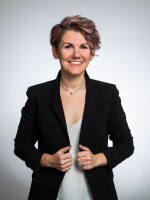
In this episode, hosts Brianna Lennon and Eric Fey speak with Michael Siegrist. He’s the Canton Township Clerk in Wayne County, Michigan, as well as the current president of the Michigan Association of Municipal Clerks.
They spoke about the state of elections administration in Michigan, about some of the work the association is doing to help better prepare its many clerks, and about why it’s important to just take a moment and take a deep breath as the November General Election approaches.
High Turnout, Wide Margins Credits:
Managing Editor: Rebecca Smith
Managing Producer: Aaron Hay
Associate Producer: Katie Quinn
Digital Producer: Mark Johnson
Transcription of the episode is as follows:
Michael Siegrist: I love, I mean, I love this job. It's a gift to do this job, and I've worked other jobs. I've waited tables, you know. I've done accounting work, and you know, I'll take the job I have right now with all the stress and all of the whatever any day of the week. It's a true gift, and I have a lot of gratitude for that.
[High Turnout Wide Margins Introduction]
Brianna Lennon: Welcome back to another exciting episode of High Turnout Wide Margins. This is Brianna Lennon. I'm the County Clerk in Boone County, Missouri, and with me is my co-host —
Eric Fey: Eric Fey, Director of Elections in St. Louis County, Missouri.
Brianna Lennon: And today we are really excited to have —
Michael Siegrist: I'm Michael Siegrist from Canton Township in the great state of Michigan.
Brianna Lennon: All right, and we're going to be talking about lots of things today, but just to start us off, we always ask our first question, which is, "How did you end up in elections in the first place?”
Michael Siegrist: That's a really interesting question, and I mean, I'm a listener, so I was wondering how am I going to answer this question? You know, “What is my election story?” And it's always fun when you hear the answers. Mine is interesting in that, you know, I remember working as a poll worker in the absent voter counting board in the 2010 election. The clerk at the time, my predecessor, had asked me to come on board in my first election. They had me chair the absent voter counting board, which is, you know, where we tabulate all of the absentee ballots in Michigan, and I did that in the primary and the general election in 2010, and I really loved it. I really, I mean, it was a long day because of how Michigan law was structured at the time, and it was intense, but to kind of see under the hood and really see the kind of chain of custody practices in place and the kind of bipartisan legal structure for how to handle ballot duplication and military and overseas ballots — it was just really cool. And they kind of, like, settled in me for a couple of years, you know? But we had, my family had a CPA practice, both my parents were CPAs, and I have a master's in tax, and I was well on my way to becoming a CPA too, and taking over the family business when the previous clerk announced that she was retiring, and I was sitting on the school board, I had been in some form of public office for a while, since 2008, and. and I just remembered that experience that I had in 2010 working the absent voter counting board, and I said — you know, having no idea what I was getting myself into — I was just like, “Okay, I'm gonna put my hand in the ring. I'm gonna do this. I'm gonna run for this position, and I did. I ran and I won in 2016. That was a contested election. I've run now two other times and nobody runs anymore. They've kind of, the secret's gotten out of how much work it is. I tell people, I'm like, “Okay,” like, “be careful what you sign yourself up for because you might just get it and it's a lot.” It's fun. It's like catching a tiger by the tail.
Brianna Lennon: One of the things I think over the years, as I've watched you from afar, in Missouri, is that you consistently have, like, you bring this energy of competency, but also just like actual energy — like nothing seems to wear you down, which is fascinating to me being in a place like Michigan, where it seems like everything changes all the time, and you're always under a microscope, and now you're nationally under a microscope, and you are the president of your association. So, can you talk a little bit about what motivates you and what has been kind of driving you to continue being in these leadership roles and speaking out on things?
Michael Siegrist: So, if I start with what motivates me — I really love this job, and I had no idea what it was going to be when I started it, and it was really, really tough. Like I said, walking into that recount, and then the first election I ran was in 2018, and I just did a horrible job. I just did such a bad job in that primary in 2018. I mean, we had double the amount of turnout we normally get, and it was brutal, and I just was not prepared. And I remember thinking to myself, “I can't believe I ran for this job. I chose this, and I am just, I'm just, I'm bombing. This is awful.”
And I ended up, about, you know, the day after the election, coming out of my office to my team, and really like making amends to them and just saying, “Look, yeah, that was not, that was not good, and I kind of dropped the ball,” and and I said, “You know, we've really got 90 days between now and November to kind of pull this thing together, and my commitment to you is that I'm going to do that. We're gonna look at everything that we did. We're gonna face every mistake that we made, and we're going to get as much feedback from our poll workers and everybody in the process, and we're going to do whatever it takes to make sure that November comes off, you know, better.” And we did. And the team, after that exercise, the team really, kind of, rallied around the entire office, and at that point, you know, I had kind of just really thrown myself to it. I was a wrestler in high school, so, like, I like, I just really have this intensity about life in general.
And so, I have this passion – when I make a mistake, I own it. You know, I don't like to deflect. I like — that's good, solid information. I need to get that feedback. And then, ultimately, I just really want to do the best job I possibly can for my residents. I believe in public service. I believe in local government, and I do everything I possibly can to make sure that it shines for people. And what's cool about local government is, when it's functioning, no one even knows it's really there. So, it's definitely a thankless job. So, that's kind of where I think that’s where that motivation comes from. I have a five-year-old and a seven-year-old, so, like, I do get worn down. I mean, life is especially — right now. Like, I was telling Eric before we got started, you know, yesterday we did public lodging and action yesterday. I've got the you know two inspector trainings today and inspector training on Saturday, as well, and, you know, just doing the stuff we all do. But all that stuff, and then, you know, the statewide association, being president and being president in Michigan, where we've got 1,600 local jurisdictions who, you know, are out there administering. You've got the 83 counties because we bifurcate it, you know, we give some duties to the counties and some to the locals, but, for the most part, the voting process is administered by townships and cities. We have 1,400 members of our association, and we're so different and diverse. You've got the city of Detroit, who are members, and then you've got, like, you know, the city of Omer, Michigan, which has a population of 54. So, it's like, how do you work for every single person in such a diverse state with diverse interests?
Elections in Michigan have drastically changed, you know, we've had two statewide ballot proposals that expanded no reason absentee and created a permanent absentee list, which basically created a class of universal vote by mail voter, and that's a sizable portion.It's about 40% of the voters in Canton Township, where I administer. We instituted early voting, and so, we've seen this expansion of voting access and voting methodology in Michigan, which is a state that is hyper locally administered. So, it's really, there's been a lot of tension in that process, and a lot of challenges financially and just bandwidth-wise. These jobs are getting harder, without the reform, you know? And then you take the fact that Michigan is a swing state and can be a bellwether for who wins the presidency, which means, you know, especially in today's society where people have not learned how to lose with dignity, they want to kind of create controversy around process with any number of just nonsense. That can be a challenge.
Eric Fey: Well, you touched on a number of things there, and I think it's interesting how Michigan clerks are dealing with kind of a twofer right now, a two-pronged challenge. Of one, you said these new voting reforms that expand different types of voting methods administratively — that's difficult, in the best of circumstances, to implement new systems like that. But you also have this kind of intense national scrutiny on Michigan, as it relates to elections. So, with those two “challenges,” let's call them. You said you're the president of the association right now in Michigan. What, if anything, is the association doing there to try to bolster the members, provide resources, you know, and, just in general, how are folks doing? And you also said it's hard filling some of these positions in some parts of Michigan right now. I mean, is that a challenge, as well? So, I know I threw a lot at you, but it seems somewhat insurmountable in some ways.
Michael Siegrist: Yeah, I think about Sisyphus a lot from Greek mythology, you know? Who is kind of cursed to push the boulder up the hill in perpetuity, but whenever he gets close to the top, it just kind of rolls back down. But then I also think about like what Camus says, which is that, you know, you transcend that suffering by falling in love with the boulder. So, you know, maybe the game is rigged. I don't know, but it's tough. It's difficult. One, I will tell you this — I love, I mean, I love this job. It's a gift to do this job, and I've worked other jobs. I've waited tables, you know, I've done accounting work, and, you know, I'll take the job I have right now, with all the stress and all of the whatever, any day of the week. It’s a true gift, and I have a lot of gratitude for that, but how are we doing? Yeah.
The association is doing a lot of work right now. I think, one, we have always been a volunteer-led association. We have 13 members. We run the association, but we're growing so large, at this point, and the demand is so great on us as volunteer board members that we're currently working with the Bipartisan Policy Center and CEAL (Coalition of Election Association Leaders) on a grant. We're trying to professionalize our association a little bit, create some executive services that might mean bringing on an executive director, looking at our dues rate, trying to figure out our academic program offerings to kind of create some efficiency and efficacy, so that we can really support our members.
There are large parts of Michigan where there's just huge gaps in coverage. We don't have members in those communities that are smaller, and they also don't have, like, smaller regional or county associations. In Wayne County, Oakland County… which are higher population density counties, they have local clerks associations. Where, like in Wayne County, all 43 communities are members of, and we meet, and we discuss things, and we do trainings, and the county comes in and we talk about ballot design and programming and what that's going to look like. We talk about the canvas. We help newer clerks kind of get ready for the canvas and understand what they're going to need for the audit, over and above the normal training we do, just trying to keep it active. So, there's people out there on islands unto themselves.
And this was a concern in 2024, a big one, because if there are 1,240 townships that all elect a local clerk in the state of Michigan, and what we were seeing is that people were not filing to run. They'd file for treasurer, they’d filed for supervisor, which are two positions in a township that have just not changed in 200 years. They just do the same job. But then there's this clerk position, and the words kind of gotten out, like, “Oh, if you do this, you have to understand you're going to make the same amount of money as the treasurer, but you're not,” you know, “now you’ve got to do early voting. Now you're going to have all these absentee ballots. You have drop boxes. You've got” — just the level of professionalization, you know? The role of clerk in Michigan went from being a clerical position to being a project manager position, and the infrastructure hasn't really caught up to that, the funding has not caught up to that. And it was hard, it was hard to fill those positions — some ended up not being filled, and the local township board had to appoint somebody to do the job. Usually, they guilted, you know, a former clerk to come out of retirement to just be a caretaker of the position, but that has been a challenge.
So, what we're doing, at the association level, is we've implemented like a clerk to clerk mentorship program, where you can, kind of, earn points towards a certification if you're an experienced clerk by taking on a newer clerk as a mentor, and so, kind of matching the newer people in the profession with veterans has allowed for people to help bring people up to speed, which is just a formalized way of doing what really I ended up, you know, I went through that process when I was brand new. I found a neighboring clerk who, you know, Sue Hildebrand from from Northville Township, who just kind of held my hand and I would call her all the time. I felt so guilty calling her all the time, but I had to. So, we're doing that, and through our educational offerings this last year, we've been offering member education days. We doubled them. We do two weeks of Clerks Institute — it's one of our educational offerings. We used to do one. We've gone to two because the number of people coming in and wanting to go through that basic level of certification has just drastically increased. So, we've just amped up our educational offerings and professional development. We've created this mentorship program, and then we, as a group, are trying to, kind of, bring on this executive services model that will free up our time so that we can really focus on trying to help some of the more rural clerks in Michigan who just don't have much support.
[High Turnout Wide Margins Midbreak]
Brianna Lennon: One of the things, through that, I assume you've seen a shift also of not only people that are reticent to take the position, so you have these gaps, but the people that may have been in these positions already, saying, like, “I did not sign up to be a spokesperson for elections. I did not want to be in front of the camera. I don't want to have to put out statements, and I wanted to be behind the scenes.” Have you — well, A - have you encountered that, and B - has that been something that you, as an association or even just individually, think is important to talk about? Because I know it can be very hard to get clerks — even that are fantastic at their jobs, know exactly what they're doing, have a tremendous amount of respect — to speak out when something is, like, inaccurate or needs to be corrected or something like that. Is that something that you've prioritized?
Michael Siegrist: Yeah, that's a delicate thing. It's a hard thing, and we have done some media training. We've done a lot of work to help folks build that capacity and that soft skill, if they don't have that. We've also done things on a personal level. A lot, some of our educational stuff, we'll bring in folks to talk about — we'll bring in some social workers or psychologists to talk about building resiliency and just, kind of, ways to build your own, like, help regulate your own nervous system. Because this, you know, one - the impending deadlines and the desire to do a good job is very stressful in this position, in general, as you know. But two - you add the outside stressors of, yeah, maybe somebody that you've gone to church with for 20 years is mad at you because they saw something on the internet, and it's not true, or you're having a struggle with your family members, or you feel isolated, or yeah, you know your community gets mentioned, and now all of a sudden, you know, you're getting voicemails that are hostile and sometimes threatening.
You know, Michigan —I think after the 2020 election, you know, Tina Barton was a great example of a local election official at the time. She was clerk of Rochester Hills, who had become a target nationally, and she reached out to some folks, and she handled it head on, and she did a really good job professionally. So, we focus on it. We are doing what we can to kind of build that skill with our members and with folks in the profession, but it is a challenge, and I think, at this point, given that we've been doing this dance for about six years now — of just kind of absolute nonsense, that we're, I think a lot of us are just kind of hardening to it a little bit. We're less reactive to it. We're kind of like, “You know,” like, “the fastest way to strike out is to swing at every single pitch,” and you really do have to kind of decide what is worth addressing, you know, and what isn't. And, at this point, I think it's anything that's going to resonate with your average taxpayer.
Eric Fey: One question I've asked other Michigan guests that we've had on this podcast is about the structure of election administration in Michigan, and you've talked about some of the challenges there. And I know it's probably a delicate topic within Michigan, but has there been any talk within your association or the legislature about this hyper decentralization you have in Michigan and whether there should be any changes to that?
Michael Siegrist: I mean, those conversations aren't — there's a lot of tension around those conversations. Michigan's got a fun — I mean, you know, Michigan is also the birthplace of motor-voter, right? And in the '70s, when Secretary of State Austin was pushing to do voter registration at the Secretary of State's office, in the DMV — there was a fight. The local clerks, man. “That was our job.” We had 1,600 different voter rolls, and it was a disaster. I mean, people were registered at, like, you know, three different cities. It was awful back then, which is funny because, you know, people freak out about the system now, but back then there were probably an extra million people on the rolls that shouldn't have been there. But that's okay. We'll set that aside for a minute. But yeah, we fought it, like, the local clerks fought it tooth and nail. And, at the end of the day, you know, it's like, we had to fall in love with that boulder around our neck. Which is funny today because now 95% of voter registrations in Michigan happen through the Secretary of State's office, through the DMV, and it's an automated process, and the data is accurate. We don't have missed, you know, everyone's tied to an address, they're tied to a number. It's the most beautiful thing in the world, but we fought it.
So, you know, this issue, depending, again, there's this perception that the hyper decentralization adds a layer of security, and, I mean, it does to some extent. But you've got hyper decentralization in Missouri, and it's county run, right? You've still got all your polling locations, you've got air gap tabulators, you've got individual boards that are running those locations. I don't know much about Missouri, but every state, you know, like, I have utmost confidence that if I were casting a ballot in all 50 states plus D.C. that it would be tabulated as I had cast that ballot because of, you know, just good security procedures in place and good, good, good election administration.
So, you know, I'm not one who tends to be, who falls in love with this notion that having all of these, you know, this decentralization, decentralized system is necessarily more secure. It is very costly — especially because we expanded voter rights. I think, you know, when you look at Wisconsin, you look at Michigan, you look at the New England states — we're one of the few decentralized states that has such a robust technical voting system, like, you might find in a Western Mountain state, or you know what I mean? Like we're, you know, we're running like a Colorado, we're running like Washington — under this really really old archaic framework, and I don't know the sustainability of it from a - recruitment and b - financing. At some point, someone's got to say, “Is it worth spending four or five times as much as another state to administer an election because of our internal process? It's a very political question.
And when they put forward the two ballot proposals into the constitution, they actually put the local clerk in the constitution. So, right now, nobody can change it without amending the constitution. So, without kind of knowing what they were doing, which is what happens when outside interest groups tend to write ballot proposals and legislation, it's a dangerous thing — many of them are my friends, and I and I appreciate some of what they did — but there are other things they did, which is they put a profession in the constitution and they gave a job to a specific official because they wrote process instead of an end goal, and by doing so, they kind of took the the ability to change that away from the legislature and the governor and local officials.
Brianna Lennon: Turning to, looking towards November — what is it that you are trying to prepare now in terms of, like, what are you expecting? I know that there's not a crystal ball, and every election has its own weird challenges, but what's keeping you up right now?
Michael Siegrist: Honestly, if I'm answering it truthfully — this is just a pretty basic midterm election. I know there's a lot of distraction. I know there's, you know, I'm not thrilled that all the commissioners at the EAC (Election Assistance Commission) are gone. We're also in the process in Michigan of preparing for a next generation equipment refresh. So, we've got an RFP out right now to vendors to try to go live with new equipment in 2027, and a lot of vendors aren't certified yet. So, it's kind of like, “Okay, that's not encouraging.”
But a lot of this stuff is distraction, right? So, that’s, you know, I think really what I'm focusing on right now is trying to pull my election workers, my colleagues, and my voters offline and off the news — and focusing on the world as it is truly around them. And understanding, like, what is going to happen November, and I don't have a crystal ball, but what I'm thinking is going to happen and what I feel like based on previous experience and where we're at today — is that people are going to be able to vote absentee. They're going to be able to vote early in Michigan and Canton, you know, at the summit on the park, whenever you know, on the days that they choose to, at the times that they choose to. Or they're going to be able to vote on Election Day, and I don't know that there's going to be anything that's going to impact that.
So, I just really think we, as a society, kind of need to handle the fear a little bit — and there's reason to be afraid of stuff, you know, there's always reason to be afraid of stuff, and bad things do happen to good people, so that's unavoidable too — but I'm doing the best I can to kind of quiet that stuff down so that none of my voters, in particular, feel wary about choosing to vote the way they want to. And I'm also trying to make sure that my election inspectors, which is what we call poll workers in Michigan, that they also feel comfortable working the election. And that's really what I'm focusing on. Everything else, just it’s actually kind of, this is geared up systematically to be the least difficult election that I've administered since I've been clerk because there's no new reform in Michigan. This is the first election where nothing has changed drastically, so I'm kind of looking forward to that.
Brianna Lennon: Personally, from your perspective of being somebody that is comfortable saying what needs to be said, you don't mind speaking truth to power and things like that — what advice do you have to clerks that feel like they don't know what to say, they don't know how to handle this, this is maybe their first election cycle because they just came into office and they're feeling very overwhelmed — What advice do you give to your own clerks like that?
Michael Siegrist: I mean, the first thing is, it's the same advice I got right away, which is, “Never turn down an educational opportunity,” you know, “Never turn down an educational opportunity.” So, you know, as you continue in this profession, go to the trainings, join the Election Center, pursue a CERA. If you've got your own association in your own state, go that route too. If you can get funding for it, look at some of the university programs that are out there that have been really developing really cool curriculum that are going to help you with media, with budget, with project management skills that you may not be bringing with you into this profession when you start. So, I'd say that's my first advice.
The second advice is find a mentor, right? Somebody you can turn to. Ultimately, have somebody you can vent to, like, have a mental health buddy who you can kind of turn to, who's gonna help walk you through it. And then just focus on your breathing, like, it's gonna be okay and know — and I'll tell you this as somebody, because I do have a decently, I have a decent media profile and community profile, which is can feel very intimidating and challenging because you're like, “If I mess up, everyone already knows me, and it's just gonna I'm gonna be humiliated. It could cost me my job,” you know” It's like, “People aren't gonna trust me and they're gonna trust the elections.” I will tell you this: when you make a mistake and you own it, and you apologize and you tell people how you're gonna make it right — they forget. It's amazing. It's amazing how reasonable people still are. So, I would say, like, relieve some of that pressure. Bake in that you're going to make some mistakes. Be open, be transparent about it, and be clear about what you're going to do different. Study it… and don't be afraid to look at what caused it. If it's you, if it's a process, if it's a personality — have the hard conversation and address it. I think you do that, like, just focus, just do the work — it's all, it's just do the work and build a network around you so that you're not alone you're not isolated.
Eric Fey: You've been listening to High Turnout Wide Margins, a podcast that explores local elections administration. I'm your host, Eric Fey alongside Brianna Lennon. A big thanks to KBIA and the Election Center for making this podcast possible. Our Managing Editor is Rebecca Smith. Managing Producer is Aaron Hay. Our Associate Producer is Katie Quinn, and our Digital Producer is Mark Johnson. This has been High Turnout Wide Margins. Thanks for listening.