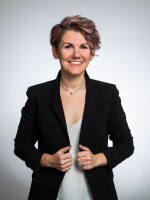
In this episode, hosts Brianna Lennon and Eric Fey speak with Tonya Wichman, the director of the Board of Elections in Defiance County, Ohio. She is also currently serving on the Election Center Board of Directors.
They spoke about Wichman’s career in elections, how she found the energy and community to keep her motivated as the job became harder, and about some of the ways she has brought joy into her county’s election process.
High Turnout, Wide Margins Credits:
Managing Editor: Rebecca Smith
Managing Producer: Aaron Hay
Associate Producer: Katie Quinn
Digital Producer: Mark Johnson
Transcription of the episode is as follows:
Tonya Wichman: With my board, they also change every four years, so it may not be, by the time she's leaving, the same relationship. But helping your board understand, or the people appointing understand — invite them in, show them what you do, make sure they understand that this isn't a job that just anybody can do. It has to be someone who can check their party hat at the door and do what's best for everybody, and remember it's for the voter.
[High Turnout Wide Margins Introduction]
Brianna Lennon: Welcome back to another exciting episode of High Turnout Wide Margins. This is Brianna Lennon. I'm the County Clerk in Boone County, Missouri, and with me is my co-host —
Eric Fey: Eric Fey, Director of Elections in St. Louis County, Missouri.
Brianna Lennon: And today we're really excited to talk to —
Tonya Wichman: Tonya Wickman from Defiance County, Ohio.
[Brianna Lennon: So thank you for doing an episode. We always ask our guests, the first introductory question, which is, "How did you get your start in elections?
Tonya Wichman: Well, everybody grows up to want to be an election official, right? No. My dad actually was a seasonal worker at the office, and the job came up. I had closed my business and was taking care of my husband's dad at the hospital and taking his mom back and forth, and he said, "I think you'd really like the guy that works here.” He's like me. He's like a dad. I’m like, “Okay.” So, I interviewed a couple of times., went home crying the first time because it had been 20 years since I had an interview, and I evidently didn't know every precinct in the county. And, for some reason, they offered me the job, but they told me when I started, they were like, "It's 8:30 to 4:30. It's a little bit longer around the election.” They did not tell me it was, like, 80-hour weeks, so a “little bit longer?” Yeah, it's a lot longer, but I think it sucks you in. I did get flowers my first day of work from my mom and dad. They were red, white, and blue, and they said, “We love you anyway” because we're opposite parties. And I've been there since, and we've had multiple directors, but it was like working with my dad… So, got my feet wet, and now — still here.
Brianna Lennon: And how big is your jurisdiction in Defiance?
Tonya Wichman: We're very small, 26,000 voters.]
Eric Fey: One thing I kind of do love about elections is election administration has a way of kind of bringing people together, and so, my office in St. Louis is similar to how you're structured in Ohio with the bipartisan structure. So, do you want to talk about that a little bit? That, you know, you have to have, kind of, equal numbers in your office, and you have to find a way to work together.
Tonya Wichman: We do. I have a great team. I am very lucky. You wouldn't know when you come to the window which party they are, which is my favorite compliment from people. We're appointed by our parties, so I really don't have any say on who my counterpart would be, which is kind of terrifying because mine is retiring after the presidential primary. But we have found a way that you check your head at the door. We're not there for our parties. We're there to make sure that people have their voice heard.
Brianna Lennon: So, one of the reasons that we wanted to talk to you is you have been very, very public facing, very much a leader in all of the election communication and explanations of things that happen. What made you decide to start doing that? Like you and I have gone to DC together. You've been, now, in movies and things like that about, you know, trying to make it easier for the public to understand elections, trying to, you know, increase the amount of confidence and trust that people have by pulling back the curtain and explaining exactly how elections work. Why do you like to do that?
Tonya Wichman: When I first started this job, I was terrified of public speaking or being in front of anybody — that was something I really had to learn. And, in 2022, I had a situation where I had to get rid of a voter out of the polling location that was screaming at my poll workers and had been, kind of, following me out of ball games when his brother played with my nephew and just intentionally trying to make me break. So, that night in 2022, I did — I told my board, I filled out my resignation letter that I keep in my drawer with a fill-in-the-blank date, and I gave it to the board and I said, "My line is, you don't get to treat my people that way. You don't have my two high school girls that have never worked, sitting in the corner sobbing, thinking somebody's going to come back and shoot them because they were so mad.”
So, my mom — because I still go to my mom no matter how old you get, you always need mom. And I said, “I can't do it anymore. I have to leave. I just, I am broken completely.” And she goes, "Well, if you don't do it, who's gonna do it right?” So, I decided at that point. They gave me two weeks to — they wouldn't accept my resignation that night, but two weeks later, I had called Liz from the Brennan Center, and I said, "Okay, I either have to fix this or I have to leave.” So, she introduced me to some different people. Avery Davis-Roberts had been a speaker at one of our Ohio conferences on mental health for election officials, which I realized I was having that problem. Met with her. We've become good friends. She led me to the Carter Center, going to Sierra Leone, watching people getting to vote, and [being] so excited, and it was just an experience where I was like, “Everybody should have this moment. Everybody should get to vote, have their voice heard, and if I can make a difference, then that's my job to do it because I know what I'm talking about.”
Eric Fey: Since then, you've done a number of other things — one of those more high-profile things was being a part of “The Officials.” That movie, I guess we could call it, talk about that experience. What was that like?
Tonya Wichman: So, I actually met Margot in D.C. the first time I met you. She had asked if we'd be willing, and my deputy director completely hates public stuff, right? So, we have a camera crew following us around our office and doing everything, and I look like I'm almost giddy in the show because I get to tell people how I do things, and I told Margot, who was one of the producers, and I said, "Okay, you have to cut that. I look like I'm just —” And she goes, "You're so excited about this! We want people to know you can do that.” So, while some of the other people found it really invasive, I was just like, "Let's go! Everybody should see what we do.” So, that was a great experience. I don't even think my husband has seen it. I don't really tell people what I do. I just kind of do it, and it happens. But I love that people are willing to reach out to me to express how elections are so important to us.
Brianna Lennon: Are you, like, are there lessons that you've been able to pull from that to take back to other like people in Ohio or even your own office? And what has the reception among your colleagues been like? Like, do they know, “Oh, if something bad's going to happen, we should call Tonya because she'll get out in front of it and protect us,” or is it more like, “Yeah, we like to stay under the radar, so we're not going to engage.”
Tonya Wichman: We have — there's six counties in Northwest Ohio that we have a group chat with – all the directors and deputies. So, everybody will put their problem out before they call me and see if somebody else will answer it. But it's been great. We've built our community on those types of things. Ohio, as a whole, I usually step back. That's kind of the association's place to take care of those things, but always willing to help. Our chair or our president of the association is running our winter conference, and I absolutely love her — Lavera Scott from Lucas County. I don't know if you've met her, but she's amazing. And she'll call me and she'll say, "Hey, you're my shero.” I was like, "What do you want me to do?”
Laughter
She's like, "Will you teach a breakout class? Will you do a panel?” And so, I don't always tell people what I do. It just kind of, like, when there was some people from Ohio that came up to me here and they're like, "Oh, you're on the board. I was like, "Yeah, for like a year.” I just do it because I believe in it, so I don't do it for people to know who I am. But people need to know how elections work.
Eric Fey: So, you just mentioned, you're on the board here at the Election Center. I found, in my own career, once I kind of got a handle on what my job was and the challenges and the things that needed improvement, I pretty quickly realized, “Well, we need to all be working together to do this,” and you volunteer for one thing, and, like you said, it just kind of snowballs into another thing and another thing. So, you found yourself on the Election Center Board now, so talk a little bit about the Election Center, what it does and what you hope to achieve being on the board?
Tonya Wichman: I will say taking classes, I took my first classes in Milwaukee — that was the summer before COVID, so then I took some classes online, which were available at that time, and then my deputy director had left and went to the EAC, and so, we were both scheduled to go to Denver for classes that summer. So, I had never flown alone. I never did anything by myself, which now I really like traveling alone and not dragging anybody with me. But I met a group of people there — it's like, my necklace has the little mountains on it because that was a changing moment for me. You walk into a room of election officials, and you all speak the same language, and you all are striving for the same thing to be better at. And those classes just drew me in. Even graduating, I actually got emotional when I graduated. I didn't know it was such an impact on me to get to do that, but the national certification was just something that I didn't have any idea on how much it meant. You get to learn from other people, and everybody says you learn more in the hallway than you do in a classroom, and a lot of times you do. But this class gave you a basis and a designation that people say, “Okay, well they're really trying. They're making a difference. They're doing classes they don't have to do.” So, the Election Center offers not just the designation for that, just not your tag in your signature line, but they offer a community, and you meet so many people that believe in what they do that it just gives you — we'll go home from this, inspired that we're not alone.
Brianna Lennon: Speaking of, like, community and things like that, I think a lot of us are experiencing turnover — not just in our own offices, but across our states and things like that. Is that something that you have seen happen in Ohio? Is there a concerted effort to try to — because we mentioned before we started that Ohio does have a certification program, and that's relatively unique — have all of these things kind of helped, do you think? And augment what you've already been doing with the Election Center? Like how do all these things kind of fit together?
Tonya Wichman: When I started, they were actually doing their REO program with Election Center, so then they partnered with Ohio State. So, it was really great because you get a little plaque that says Ohio State, which is huge for us — and I graduated from Ohio State before my daughter, so it was awesome. But, it's again, you're meeting people from across the state, and if you're taking these classes — they're not required. So, it's somebody that wants to make a difference. Then they started partnering with election officials to teach the class, so we were teaching with professors. So, I got to teach one of the online classes, which is great because you don't see people staring at you, but I learned so much from the professor on how we work things back and forth. So, it's been a great experience, once you get through the certification program, they offer you — just like we do for CERA — the graduate classes. So, you're always learning and always finding something new, but we're all learning the same thing this way. We have 88 counties, and we'll say certain things, we're doing it 88 different ways. We're following the law, but everybody has their own process.
Brianna Lennon: Have you gotten good feedback from newer election officials that this is helpful? Or because, I will say, from our state, we're starting our certification program, and it's very much in-house, and we're working with the Elections Group, and it's really great. But there's been a change over the years where potentially if we had floated the idea 10 years ago, people would have said, “We like what we're doing in our own place,” like “we don't really want to look beyond that,” and now people are really hungry for more information and want to know what other places are doing, what the best practices are. How is it with your new folks?
Tonya Wichman: I think that comes with the fishbowl we're in — everybody's afraid to make a mistake. I mean, everybody wanted to do it right, but now, if you make a mistake, the whole world is going to watch you make that mistake. Like our little group chat that we have… in Northwest Ohio, I just went to a retirement party of the last one that was there when I started, so it's just me. And my deputy has tenure at four years. So, there is a turnover. There's a lot of knowledge leaving with people, so I know the Election Center has just added a graduate course for succession planning that's running this weekend. So, getting somebody in there, getting somebody trained, making people understand the importance of it not being a revolving door, and classes like that in association where you're bonding together and learning the ins and outs without being afraid.
[High Turnout Wide Margins Midbreak]
Eric Fey: So, you mentioned turnover. I think that's something every state is struggling with, and I wonder if that's something — you mentioned here, the Election Center now has a class on succession planning — is that something you all, as a state association in Ohio, have tried to address in any way? I mention it because, like in Missouri, we didn't have a training program like you all do in Ohio, and so, we just started one last year because turnover had become so prevalent that we needed to start having a more deliberate training program to get people up to speed on things. So, I'm wondering if in Ohio you've tried to respond in any particular way?
Tonya Wichman: There isn't a succession planning there, and, like I said, I know this is the first time for the Election Center to offer that. But I think you see a lot of it. The stress is much different than it used to be. I know I started 11 years ago, and my doctor will tell you the levels are completely different than it used to be. But it is more focused on public viewing, so you want somebody that's coming in new to know, like, we have one of the counties coming over to our office on Monday, and we're going to show them how we do things, and that's kind of how we're building our little relationship in our area. We set up our own quarterly meetings that we get together, and we'll do a best practices, or we'll do, like, “What do you need help with,” that kind of thing. So, we're addressing it. It's a rural community, so we share newspapers across county lines, those kind of things. So, we're giving the same messages, but the new people need someone to look up to. So, my deputy will be leaving, like I said, after the presidential primary. So, our plan is to ask the board, "Can you hire someone to do that election with her? There's no way to train during a presidential year, and I know it's a cost, but it's more of a cost if somebody fails.
Eric Fey: So, I want to follow up on that real quick. As was mentioned earlier, in St. Louis, we have a similar structure, this bipartisan structure, and party leaders have a big hand in who is chosen in these roles. With turnover becoming more of an issue, I've known — and I don't know about your party leaders — but some that I've known, their first consideration is not necessarily the competence or the experience of the election official. It might have more to do with some partisan things, and that's more concerning in an era, in a time where there's more of a spotlight on us, and, like you said, if you make a mistake, it's going to be known everywhere. Is that something you all in Ohio have talked about at all?
Tonya Wichman: It's not much of a choice. So, the two board members would choose the two board members of that party, which a lot of times brings the party in for that type of thing. I have built a great relationship with my board. They also change every four years, so it may not be, by the time she's leaving, the same relationship. But helping your board understand, or the people appointing understand — invite them in, show them what you do, make sure they understand that this isn't a job that just anybody can do. It has to be someone who can check their party hat at the door and do what's best for everybody, and remember it's for the voter.
Brianna Lennon: On that note, and shifting gears a little bit, you have done some travel to D.C. and talked to legislators there. What message do you bring from Ohio when you go to talk to decision makers that are talking about policy, and not just policy, but funding, as well. That we've kind of touched on, that it is cheaper to invest early and do it correctly the right way, so that you don't have mistakes later on that cost more, in more ways than one. What's that been like, and what message are you bringing?
Tonya Wichman: It was really interesting. In January, I got to meet with some of the budget committee, and explaining to them what was happening before we got the last $400 million funding, right? We were literally using duct tape to put our machines back together. We were scavenging parts from ones that were completely pulled apart because they didn't make them anymore, and we're like, "Do you want to vote on a machine, for yourself, with duct tape on it and hope that everything comes out okay? Or do you want to fund it and make sure that the transparency we have and the confidence in the election are going to be there for your constituents that, you know, are using that same equipment?” And you can't do that — small counties can't do that without help, you know, we're getting to the point where we're going on eight years. They say a 10-year life. Nobody's seeing anything coming. They did go from $15 million to $45 million for the funding this year, but even if that just came to Ohio, you spread it across 88 counties.
So, Secretary of State's offices are going to take some. If you go meet with any of the vendors here at the conference, ask them a price on one scanner — I was with another lady that was speaking to people, and she said, "When's the last time you changed your cell phone?” Like, "Oh, usually every two years.” And she goes, "So, the electronics we use should be every 15 to 20?” And it was just, kind of, a perspective of technology changes, security changes, you know, we're not connected to the internet in Ohio in any way. We've had to explain to people that the cord that's coming out of the wall is to run the printer, and we can talk about electricity, or we can send you to, you know, someone else that might explain that better for you. But, I mean, the funding is the biggest thing. But to help them understand that we are secure, like, “Let me explain the steps you're worried about.” I spoke at a leadership group last year, and somebody said, "Well, have you seen the movie “2000 Mules”?” I said, "Have you seen the movie “No Time to Fail”? And they're like, "Well, no.” And she goes, "Well, there's stuff in ballot boxes,” which then, in turn, I spent 20 minutes explaining on how we check signatures on ballot boxes and how an envelope goes out and how everything is assigned by a ballot number, and they're like, "Well, I didn't know that.” And I said, "But we're always happy to tell you. If you're concerned about something, ask your election official.” So, they stopped asking questions, but it was enlightening for people to see, “Okay, everything you see in the news is not what's actually happening.”
Eric Fey: You mentioned the federal funding, and you mentioned how the Secretary of State's office is going to take some, and how is that broken down for you in Ohio? Because in Missouri we've had our own struggles with that — that doesn't always necessarily get to us from the state level, and that's one thing, when I've spoken with folks in Congress, [I] say there really needs to be some mechanism to make sure the funding gets down to the locals. I'm wondering if you have that struggle, as well?
Tonya Wichman: We're pretty lucky. Our problem with it coming from the Secretary of State's office is they base it on number of voters, when they break everything down. But my main system costs the same amount as it costs for somebody with 300,000 voters, so, again, we have to go to our commissioners and say, "Hey, can you help us out, finish this off?” Where small communities don't have the same type of funding that they used to have. We had a bill that they were trying to get put on, or a petition on getting rid of all property taxes in Ohio, so I was like, “Okay, now where does the money come from?” And if you'd ask the people circulating the petition, they're like, “Well, they'll find it. It's the government.” And I said, “Okay, let's see the impact. Let's show them the impact of what happens. Go for three days without any of the services that we offer that's based on levy base.” As an election official, we have put every single measure on the ballot and voted on it individually, so how can you wipe it out with one vote? Everybody has already made their choice, but that funding we charge back for people in our community. We can charge back the school district. We can charge back the townships, the villages, the cities, but we don't get to charge back the federal government, and what's your highest turnout? It's going to be the 85% in a federal one, where my local ones I'm charging for the full election is at 22%. So, I think breaking it down for them to understand the cost per voter, because they bring out so many more people, hopefully will eventually have some influence on them understanding the cost of running a federal election and the funding problems.
Eric Fey: So, we're talking still about this federal funding. — you just made a very good point about it. One kind of counter argument I've heard from some election officials, some that passed, like Brianna's predecessor years ago, she would have argued, "I don't want to ask the federal government for any more funding because then they'll make me do things I don't want to do.” Like they'll put strings on it, stuff like that. How do you feel about that argument when it's made?
Tonya Wichman: I don't think that's something they want to look at. I mean, for instance, we had a village that, for some reason, has a partisan race for village council. So, we had three people running for two positions. So, we ran an entire election for this one-party ballot in three precincts for the community. We explained to them the cost of this, and newspaper, you know, calls, “What does that cost for that?” So, we broke it down per voter. We had to be open for 30 days of early voting. We say we had one and a half people vote in those 30 days, but we had the extended hours, we had the weekend hours, and we say one and a half because one of our commissioners stopped in for something else, and we're like, "Oh, are you here to vote?” And he goes, "I can.” Or we would have had one person. So, that cost all went to the village. They asked us the cost. We shared that cost. If we would share the cost per voter and break it down for people to see what we've charged for a, what we would charge the federal government, I think it would bring a really interesting perspective for them, but they don't always ask about the cost. They just want to know that it's safe.
Brianna Lennon: Ohio also has had a lot of special elections — how many elections have you had in the past two years?
Laughter
Tonya Wichman: ‘22 and ‘23 were way worse. ‘23, they eliminated August elections through a legislator, unless it was an emergency, and then that same year they put on, [in the] August election, on a bill where it would change the threshold of voting for a certain amendment that was going to be on in November. So, that was actually when we came up with our themes for our elections because the state threw us a curveball, so our team was going to knock it out of the park, and we all wore baseball jerseys, and we all did goofy things like that, which has inspired us to be more fun since then. We do a theme every election, but I did have a couple of my poll workers come in and say, "I can't work this,” like, “this is really wrong that we're having this election. You shouldn't — this is trying to change a law before people vote.” And I said, “I agree, but people still need to vote on it. So, how do you believe you can stop it by not being involved?” So, they worked, and it was — there were certain things that you question the integrity of things that are put on the ballot, but it's not for us to decide. But it's exhausting.
That's where I said, you know, you'd have — I had a week off for my daughter's wedding, and we threw a special election, and I didn't get my week off for my daughter's wedding. I was taking phone calls the morning of the wedding to change something on the ballot last minute, but it got done. She had a beautiful, beautiful wedding. I actually used to own a party store before I came to the Board of Elections, so I love themes. Our family is kind of crazy. We did, for the May election, it was on Cinco de Mayo, so we had a fiesta and everybody had a potluck with tacos and all kinds of different things like that. Our presidential general election, we did the Greatest Showman, and, you know, we had the top hats and we had just the fun stuff and the music and people would walk into the music for that and we were like — somebody asked me, “What's that theme mean? Because the ballot's full of clowns?”
Laughter
And I was like — there's always an underlying cause to some of our themes — but I said, “No.” I said, “The movie states that we bring people together of all walks of life to do something really great, and that's what we're doing on Election Day.” So, it randomly comes up. I think in the spring we're going to do Derby Days just because we want to buy a Derby hat. We ordered football jerseys for this one that say “Vote on it,” and the poll workers will all wear whatever team they like or something. But we change our training slides to each theme, so it's not the same training every election. They're coming in, and they're like, "What's the next theme because we're going to plan our potluck for May?” So, they come back and they're already talking about coming back for the next election. I mean, like the one we did with the baseball theme that was kind of a breaking point for me. Like I cannot do another election. I cannot use these same training slides. I just can't. But we found, like, when they came in, “We're gonna make it fun. We're gonna do something that they're gonna have a good time.” So, everybody had to tell us what their walk-up song would be if they were a baseball player, and everybody was already talking, and then they were engaged, and people weren't afraid — they've already heard their voice in the room. So, it's just kind of snowballed to. It's just more fun this way. So, we decorate the office. We have a big banner right now that says "Game Time,” and we're kicking off the general election. But it just it makes it more enjoyable — you have to find the joy where people aren't always just frustrated and tired.
Eric Fey: You've been listening to High Turnout Wide Margins, a podcast that explores local elections administration. I'm your host, Eric Fey alongside Brianna Lennon. A big thanks to KBIA and the Election Center for making this podcast possible. Our Managing Editor is Rebecca Smith. Managing Producer is Aaron Hay. Our Associate Producer is Katie Quinn, and our Digital Producer is Mark Johnson. This has been High Turnout Wide Margins. Thanks for listening.