

Najifa Farhat
Health ReporterNajifa Farhat is an award-winning investigative reporter covering health for KBIA’s Health and Wealth Desk. Her reporting focuses on the intersection of health and broader issues of well-being, including environmental and climate impacts, food security, marginalized communities, and emerging solutions and technologies. She approaches her work with the belief that every story has a health component.
Farhat holds a master’s degree in environmental journalism from the University of Montana and has reported extensively across the Mountain West, Southwest Michigan and now, Missouri.
She can be reached at najifa.farhat@missouri.edu
-
 On this month’s Socially Transmitted, KBIA's Najifa Farhat and Rebecca Smith look at what we do and do not know about the practice of mouth taping.
 -
 Missouri Department of Health and Senior Services data show 254 people died from heat-related causes between 2014 and 2026. About 6% of those deaths were listed as being related to occupational activities.
 -
 The Climate Prediction Center says parts of southwestern Missouri could experience rapidly developing drought and extreme heat in early September
 -
 Here's a roundup of regional headlines from the KBIA Newsroom
 -
 On this month's Socially Transmitted, reporters Najifa Farhat and Rebecca Smith examine the safety of drinking raw milk.
 -
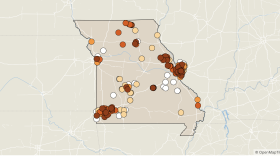 Researchers examined 202 monitoring locations across Missouri and found potentially unsafe levels of fecal indicator bacteria at 171 locations, or 85% of the sites, on at least one day of testing.
 -
 A recent analysis by ValuePenguin found the estimated number of pickleball-related injuries treated in U.S. emergency rooms nearly quadrupled between 2018 and 2025, with falls, slips and trips accounting for nearly 65,000 ER visits nationwide.
 -
 Missouri blood centers say they have not reached the point of issuing an emergency appeal yet but are watching closely
 -
 Before the smelter shut down in 2024, air monitors showed the surrounding area exceeded the federal one-hour sulfur dioxide standard
 -
 In Missouri, nearly 600 people have fallen ill after fresh produce products identified as potential sources in the outbreak reached grocery store shelves across the state.


